MSU’s Famous Maroon Band receives top collegiate marching band award as it celebrates 100th anniversary of the ‘Famous Forty’
From marching at Davis Wade Stadium to performing abroad, Mississippi State University’s Famous Maroon Band stands as an enduring and cherished Bulldog tradition.
Now, its rich legacy of more than 120 years has earned what is considered the highest award a collegiate marching band can receive: the Sudler Trophy.
Regarded as the “Heisman Trophy of the collegiate band world,” the Sudler Trophy can only be won once by a single program. As the 2026 recipient, the FMB is the 35th collegiate marching band to earn the award and the only one in the state.
Elva Kaye Lance, MSU’s director of bands, took the long-awaited call saying the FMB won the prestigious award.
“The first thing I did was call our associate band directors Craig Aarhus and Cliff Taylor,” recalled Lance. “I felt humbled that we were included in the conversation of top band programs in the country. Looking at the list of programs that have won this award over the years, it is such an honor to be among them because they are significant band programs.
“Interestingly enough, the announcement came at the same time as the Mississippi Bandmasters Association State Band Clinic, which is a big recruitment event for us with hundreds of high school students,” she continued. “We were thrilled to be able to share the news at the event and build excitement around our program.”
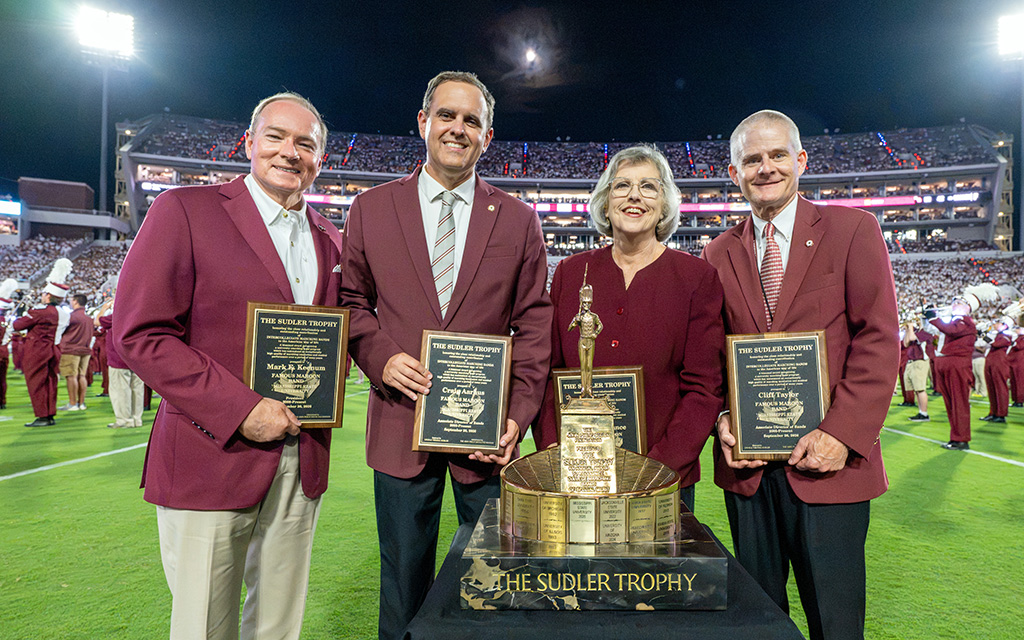
L-R: Mississippi State President Mark E. Keenum, senior associate director of bands Craig Aarhus, director of bands Elva Kaye Lance and associate band director Cliff Taylor celebrate the Famous Maroon Band’s receipt of the prestigious Sudler Trophy during a halftime presentation at Davis Wade Stadium.
The Sudler Trophy is awarded every two years by the John Philip Sousa Foundation to a college or university marching band demonstrating “the highest of musical standards and innovative marching routines and ideas, and which has made important contributions to the advancement of the performance standards of college marching bands over a number of years.” Presented annually for its first 25 years, the award has only been given biennially since 2007 through a grant from Louis and Virginia Sudler.
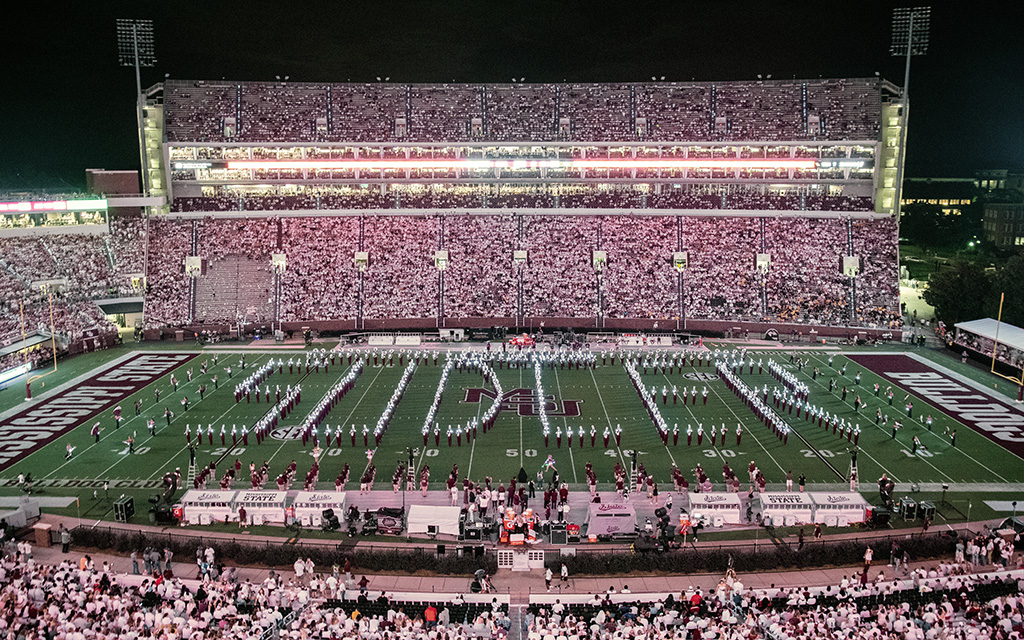
This fall, the university celebrated the historic achievement with a special halftime presentation during the MSU vs. Missouri football game. Gordon Henderson, a representative of the Sudler Foundation and professor emeritus and former director of bands at UCLA, presented the trophy to the Famous Maroon Band alongside members of the Sudler family. The celebration weekend also included a band alumni banquet, Wind Ensemble concert and FMB student banquet.
“The Sudler celebration gave us an opportunity to honor the remarkable legacy of the Famous Maroon Band, to express our gratitude for those who have carried that legacy before us, and to look with excitement toward the generations who will carry it forward,” Lance reflected. “Thousands of students have proudly worn our uniform, and those of us serving as leaders of the band program recognize we are standing on the shoulders of those who have served as members and leaders of the Famous Maroon Band throughout its rich history.”
The Prelude
Founded in 1878 as an all-male military school, Mississippi State’s first recorded campus musician was a bugler who awakened cadets each morning playing “Reveille.” The first official band at what was then Mississippi A&M was founded in 1902.
Carl Leake became the band’s first director in 1911. It was a part-time appointment as he also taught woodworking. The 40-piece ensemble practiced in the woodshop, and he used his carpentry skills to make wooden music stands for the musicians. It was also his responsibility to provide music for the band, but most of Leake’s music was destroyed by the Old Main dormitory fire in 1959 as one section of the building was the band’s dedicated living quarters.
Magazine ads with messages like “Want a music education? Come to Mississippi A&M!” drew students from across the country to the Starkville campus. Select band members could receive tuition, board and laundry, provided they made passing grades in their coursework and military deportment. The initiative is one of MSU’s earliest organized recruitment plans, with a 1908 report stating a goal of the program was to “make for the school the place in public favor that it should have”—an aspiration still held by the band today.
Among those recruited was Henry Wamsley, an Illinois native who later served as director of the Mississippi A&M band for 30 years.
The Famous Forty
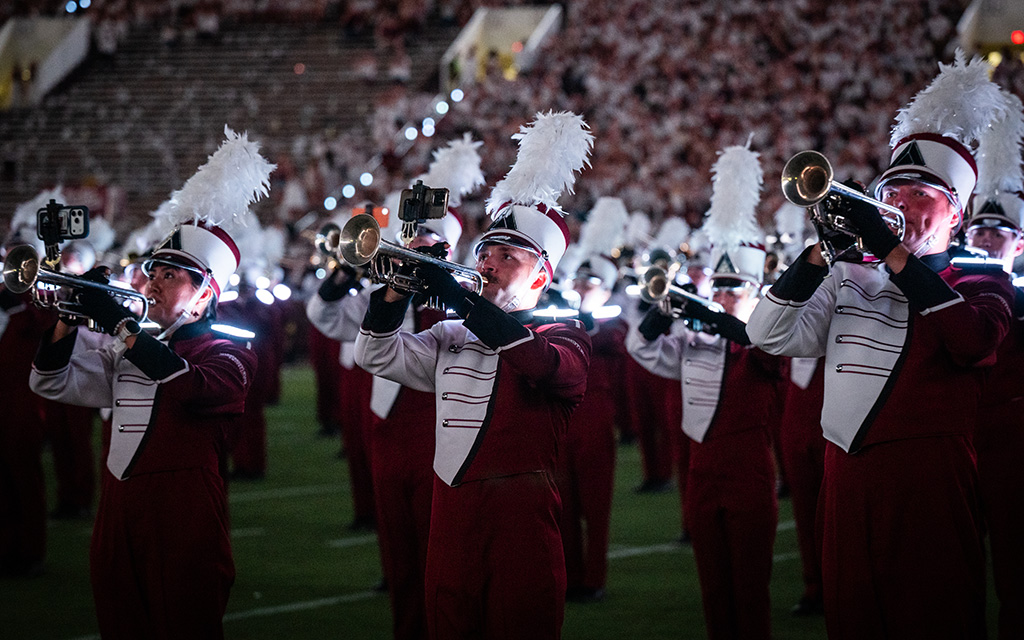
Perhaps one of the most colorful parts of the Famous Maroon Band’s history is the tale of the “Famous Forty.” As the story goes, a highly anticipated Mississippi A&M and University of Alabama faceoff in 1926 featured not only four quarters of football but a halftime battle of the bands at the East Mississippi Fair in Meridian. The winner of the marching band contest earned a loving cup, or trophy.
Louis Wise, a 1927 graduate and band member at the time, reflected in a 1976 issue of Alumnus magazine, “The thoughts of beating Alabama in a football game, plus the excitement generated by the band competition, fired up the A&M student body.”
The enthusiasm was so contagious the A&M student body chartered a special train for the trip to Meridian.
Student newspaper The Reflector promoted the band contest for weeks and stated at one point, “Saturday morning at five o’clock, the A&M Special will leave the college campus en route to Meridian, mecca for the rooters supporting the A&M-Alabama football teams.
“There is an air of suppressed excitement all over the campus … this trip is for our pleasure, for boosting the team, and for representing our Alma Mater. And let us not forget the latter part of this statement. The reputation of this school rests upon each of us, so conduct yourselves accordingly.”
Directed by Wamsley, the Mississippi A&M band traditionally wore military uniforms, but they broke that standard for the competition. The band purchased new uniforms consisting of maroon coats with white trousers, to the surprise of the Alabama band.
In his 1985 book, “Four Pioneer Mississippi Bandmasters and a History of the Mississippi Bandmasters Association,” Perry Dennis describes the historic contest:
“Half-time came, and Wamsley’s band stepped out on the field in the new, colorful uniforms and went through their routine. Their performance was so good that the bandmaster of the University of Alabama band would not take his band onto the field. All the A&M supporters were elated about this win over the big rival, and the forty bandsmen were overjoyed.”
Those A&M band members became known as “The Famous Forty” and took home the loving cup, which is still on display in the band hall today.
A sportswriter later penned the name “Famous Maroon Band” based on the contest, and the band has gone by that title ever since.
Explore the people, performances and traditions that shaped a Mississippi State legacy. Select a date to see each milestone.
From 40 to 400
Wamsley is credited as the first band director in the South to have a marching band perform at halftime of a football game.
“In the early days it was a practice to have a half-time ‘game’ between ‘scrubs,’ who were not members of the first-string football team, but in about 1924 Wamsley persuaded the president of the college, D.C. Hull, to allow the band to perform at the half-time of football games on the campus,” Dennis writes in his book.
Beyond halftime performances, Wamsley transformed the A&M band program from a minor part-time activity into one of the nation’s top bands. Moreover, the FMB was at the forefront of developing school band programs in Mississippi during its early years, thanks to Wamsley’s innovation. He offered summer training programs in the 1930s, which laid the groundwork for MSU’s future music department.
While band membership declined during World War II, it picked up again after the war. Wamsley was succeeded by W. Thomas West in 1952, and by that time, the band had reached 100 members. As the band grew, so did the need for a music education degree program. Several state superintendents requested the college develop a program that would train band and choir directors.
In the late 1950s, Mississippi State College became Mississippi State University, and the Department of Music Education was established, tracing back to Wamsley’s training initiative. Now known as the Department of Music, it is housed in the College of Education and has expanded to offer programs not only in music education but music performance, audio production and more.
In 1967, Peyton Crowder took the reins of the FMB, and the band grew dramatically over the next several years, following the trend of other college bands. James Hejl succeeded Crowder in 1978, and the following year established a new tradition with the creation of the Maroon Alumni Band. More than 100 members attended the first meeting and marched with the band during halftime of the MSU vs. Marshall football game.
Kent Sills became director in 1983, and the band increased to more than 300 members during his tenure. He created a patriotic halftime performance, which is now a longstanding university tradition. Rod Chesnutt followed Sills as director in 1999, and, in 2002, Elva Kaye Lance became the first female director in the Famous Maroon Band’s history.
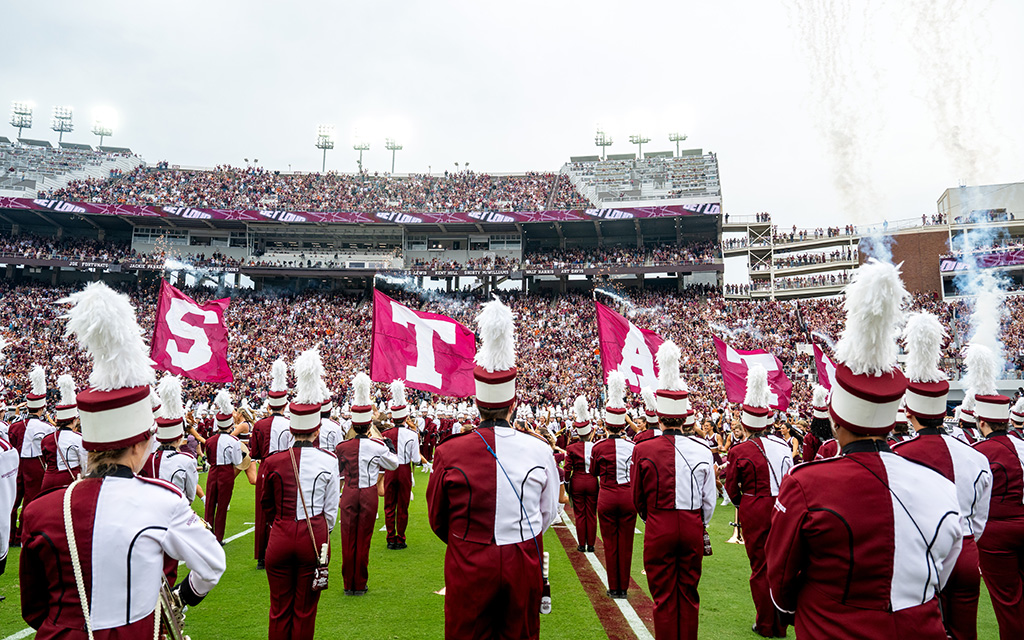
The band’s facilities have come a long way from Carl Leake’s woodshop. Major facility advancements have been made during Lance’s tenure, from the state-of-the-art Kent Sills Band Hall to the synthetic turf Lance Practice Field. And now, a century after the “Famous Forty,” the band marches with more than 400 members representing every academic college on campus, 179 high schools and 15 states.
Today’s Famous Maroon Band
When asked about the Famous Maroon Band, most Bulldog faithful recall the State spell out, the fight song or halftime shows at Davis Wade. As beloved as those traditions are, the FMB offers much more to the MSU and broader Starkville community.
Along with the marching band, the program includes four concert bands, two basketball pep bands and a jazz band. In addition to regular performances at football and basketball games and notable campus events, the band has made appearances in the Mississippi Governor’s inaugural parade, national basketball tournaments and numerous bowl games.
On the international stage, its wind ensemble has performed in Austria, the Czech Republic, England, Germany, Ireland, Italy and Spain, providing students invaluable experiential learning opportunities.
“It is absolutely a joy to be able to facilitate an international experience for our students,” Lance said. “We try to partner with other musical ensembles while we’re there and share a concert. Music is a universal language, and I love the perspective students gain when we travel abroad.”
While the band has enjoyed national and international acclaim, its impact extends far beyond performance venues. The FMB hosts approximately 850 high school students for various on-campus events throughout the year. Band faculty regularly present clinics and workshops throughout the state and region, including annual band director workshops and student leadership training opportunities. Band members participate in multiple charity events each year, from the Children’s Miracle Network Dance Marathon to the National Bone Marrow Registry, of which the FMB is one of the country’s top participants among college bands.
The Heartbeat of MSU
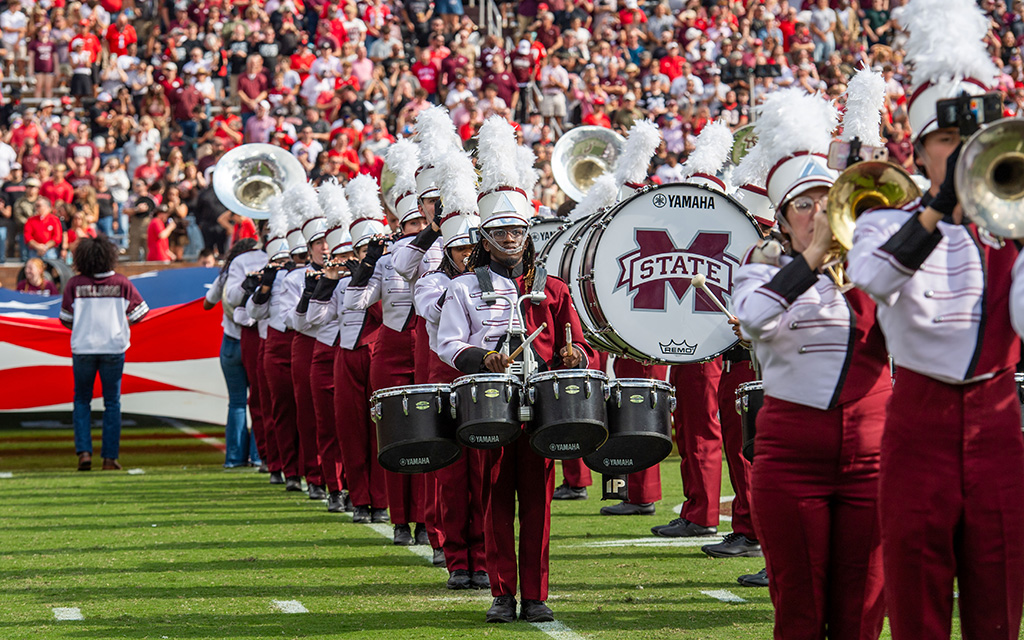
Over time, the Famous Maroon Band has become not just the drum beat but the heartbeat of Mississippi State University.
“As I was looking back through photos to display at our Sudler Trophy Banquet, I was reminded that we have been part of so many university programs throughout the years,” Lance said. “The band has played for building dedications, investitures for university presidents, convocations, U.S. presidential visits, an SEC football championship, Final Four appearances and other significant functions. We have truly been an integral part of the university.
“Our senior associate director, Craig Aarhus, often refers to our opportunities as ‘get-to’ moments,” she continued. “You get to do a lot of different things and be part of really special moments by being in the Famous Maroon Band.”
Receiving the Sudler Trophy is a special moment Lance and the rest of the band will likely never forget. With such a powerful legacy of strong leadership, musical excellence and dedication to enriching the Bulldog family, the band has now reached the ultimate crescendo with the prestigious recognition.
As Daniel Stevens, head of MSU’s Department of Music, puts it, “The Sudler Trophy affirms what generations of Bulldogs have always known: The Famous Maroon Band stands as a national beacon of excellence, innovation and pride. This honor celebrates the thousands of students, directors and supporters who built its legacy and inspires us to carry its mission forward with renewed purpose.”
The Sudler Trophy now proudly stands in the band hall along with the loving cup from the Famous Forty contest—both representing unique milestones with an incredible history in between.
By Bethany Shipp, Photos by Grace Cockrell, Emily Grace McCall and Josh McIlwain
Loyal Friends We’ll Always Be
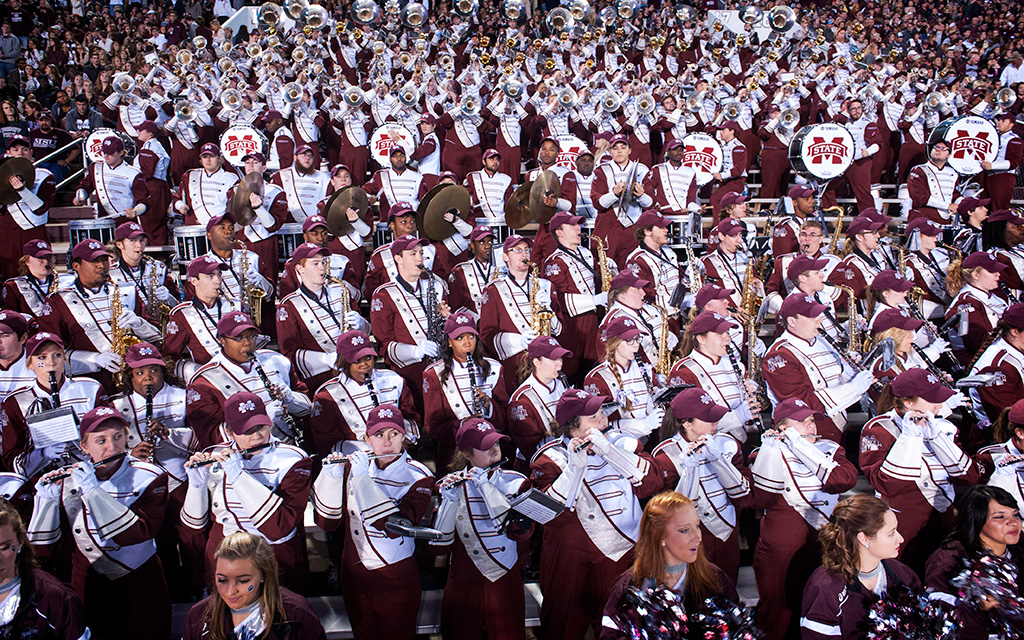
Henry Wamsley, who led the maroon band in 1926 when it became “Famous,” composed the music of the university’s alma mater, “Maroon and White.” While the familiar tune is played at football games and commencement, the lyrics often evade the average Bulldog alum.
MSU Director of Bands Elva Kaye Lance said it is tradition for all FMB members to learn the words to the alma mater.
“A lot of our graduates have told us that when they stood at their graduation, they were one of the only ones who knew the words to the alma mater,” Lance said.
Do you know the words? Click here and listen to the band perform “Maroon and White” and sing along.
Maroon and White – Alma Mater
In the heart of Mississippi,
Made by none but God’s own hands,
Stately in her nat’ral splendor
Our Alma Mater proudly stands;
Mississippi State we love you,
Fondest mem’ries cling to thee,
Life shall bear thy spirit ever,
Loyal friends we’ll always be.
Chorus:
Maroon and White! Maroon and White!
Of thee with joy we sing;
Thy colors bright our souls delight,
With praise our voices ring.
Words by T. Paul Haney Jr., Music by Henry E. Wamsley
Visit the Famous Maroon Band’s YouTube channel to watch pregame and halftime performances, concerts and more.
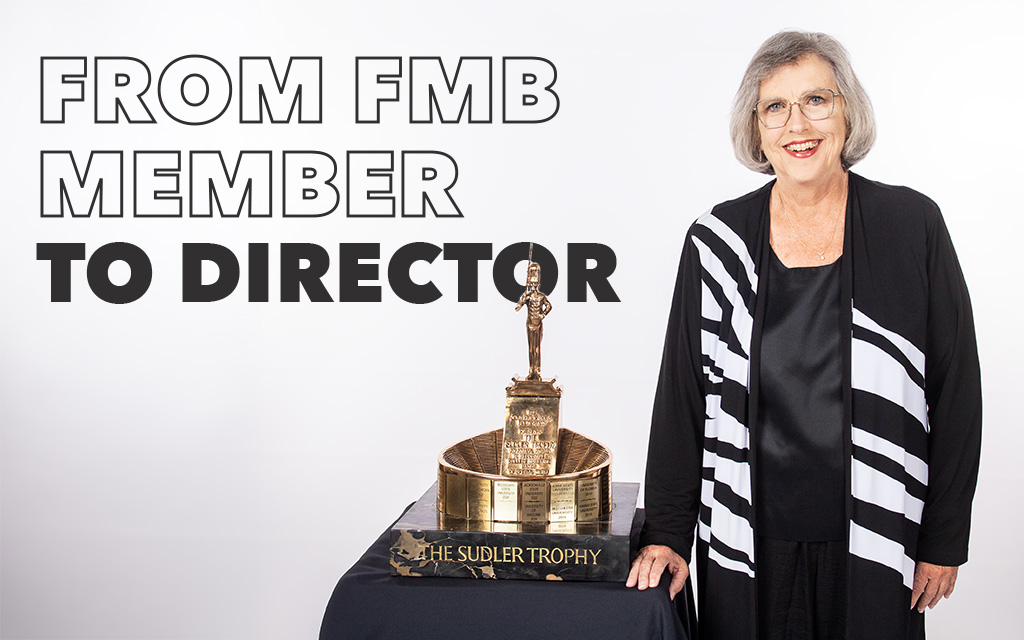
With more than 34 years of university service, Elva Kaye Lance has raised the bar during her tenure as MSU’s director of bands. Under her leadership, the Famous Maroon Band has seen significant growth and major facility enhancements. She has conducted performances throughout the country and abroad, served in the leadership of state and national band organizations, and received numerous honors, including twice being named Mississippi Outstanding Bandmaster.
The veteran music educator began her Bulldog journey as a member of the FMB herself, which laid the foundation for the passion, expertise and vision she brings to the band program today. A 1976 music education graduate, Lance played the euphonium and was first chair in her section all four years.
What is a favorite memory from your time as a band member?
“When I was in the FMB in the ’70s, all the football games were played in Jackson, except for homecoming. Often, you’d have a State game and an Ole Miss or Southern game on the same day at Memorial Stadium. One of my fondest memories is gathering with other bands and seeing friends from across the state at our meeting place, Morrison’s Cafeteria, which was right up the hill from the stadium.”
“When I was a music major, the band was an integral part of my degree experience, and I made lifelong friends. Our band staff is committed to helping students who come through our program continue to have that kind of impactful and positive experience.”
What is your favorite part of being a director?
“The students. I love making music at this level with our students. But another real joy is the opportunity I have to interact with not only our current students but also prospective and former students—sometimes within the same hour. There are not a lot of jobs that allow this kind of connecting thread within our university family, and I am very grateful for those experiences.”
What is your favorite FMB tradition?
“The patriotic show is my favorite tradition because of the amazing veterans who have participated over the years. I remember in the ’90s, a veteran came up to me crying, thanking me for the opportunity to participate, even though it was bitterly cold. He had served in the Battle of the Bulge. Our show has included veterans from all the major wars and conflicts, and being a small part of honoring them and their service has been one of the most inspiring experiences of my life.”