

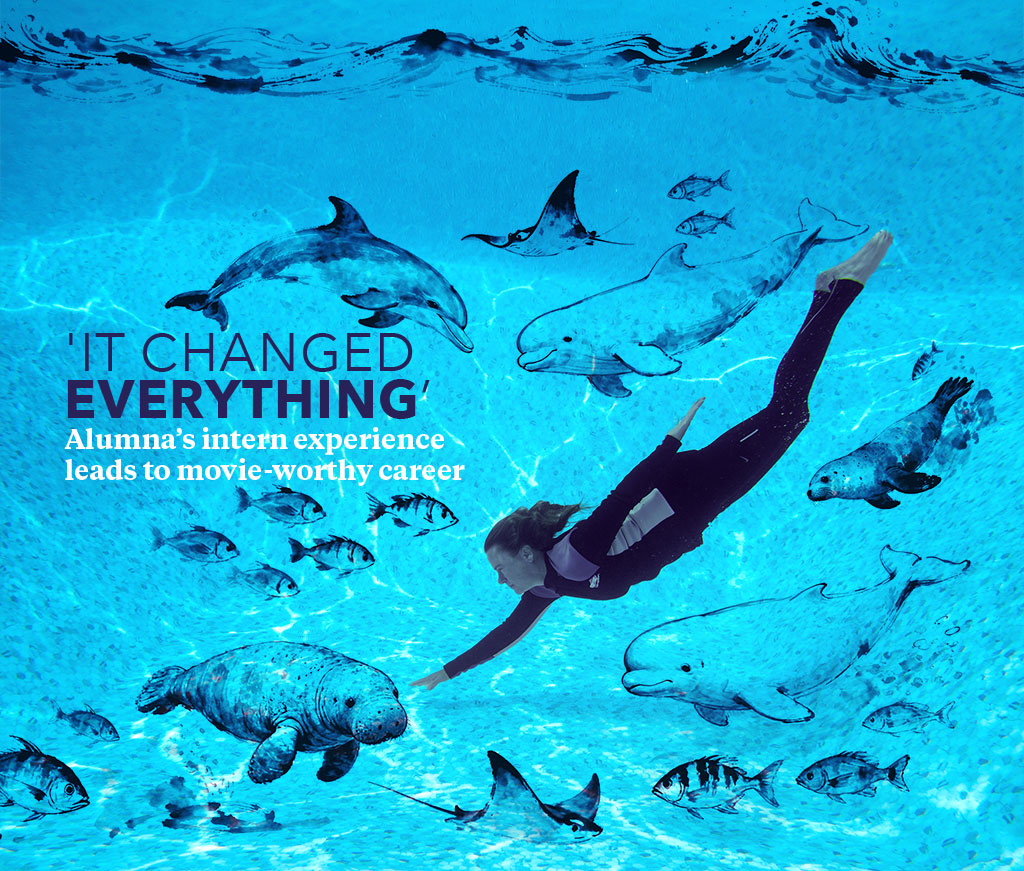
Holley Muraco enrolled at Mississippi State planning to become a veterinarian. Then her roommate visited SeaWorld and set off a chain reaction that would change not only Muraco’s future but that of worldwide marine research as well.
A native of Potts Camp, Muraco grew up around the animals of her grandparents’ small farm. When it came time for college, she naturally found herself drawn to veterinary medicine and enrolled at Mississippi State as an animal and dairy science major on a pre-veterinary track. While she was doing all she could academically to prepare for vet school, she knew animal-based work experience would help her boost her application.
Her degree path gave her exposure to cows and horses, but Muraco said she wanted something more to stand out from the crowd. Her roommate’s family vacation helped inspire the out-of-the-box thinking she needed.
“My roommate came back from a trip to SeaWorld and said, ‘Holley, the dolphins were amazing. They could jump and do all these things!’” Muraco recalled. “I thought they sounded really interesting. Out of sheer curiosity, I went online to see if there were any job opportunities available with dolphins.
“There was behavioral research with dolphins at Epcot. I applied but didn’t think for a second I would get it,” she continued, “and I didn’t. But they sent me a letter saying they thought I’d be a better fit for the husbandry internship, which was paid. I did the interviews and got the job.”
Going under the sea with Disney
In the spring of 1996, Muraco moved to Orlando, Florida, to begin a six-month term working with Disney World’s Epcot aquarium, a large attraction with fish, dolphins and other marine animals located at what is now The Seas with Nemo and Friends pavilion.
“I had barely ever left the state, but I headed down to Orlando and it changed everything,” Muraco said.
A certified but admittedly inexperienced scuba diver, Muraco was tasked with diving in the large tanks to feed and care for fish and sharks and aid in training the dolphins. She also got a taste of performing through Disney’s diving shows at the aquarium—scheduled feedings during which crowds could watch and ask questions of the divers, and she charmed visitors with her Southern accent.
“I was very scared, very young, completely overwhelmed and absolutely not capable of doing the job they wanted me to do, but they were so supportive,” Muraco said.
“The whole intern experience was life changing, and it showed me you could work with animals without being a veterinarian,” Muraco continued. “I realized the work I did there with the marine mammals and fish—that was what I wanted to do.”
Exploring the magic of animal husbandry
With her eyes open to new animal-related careers, Muraco changed her major to biology. Following her MSU graduation in 1998, she returned to the Sunshine State to begin her career in animal husbandry, including a stint at SeaWorld and a return to Disney World where she was an aquarist at Epcot and later an elephant keeper and primate caretaker at Animal Kingdom.
While at Disney, she also met her husband, fellow animal trainer Mike Muraco. When he received a once-in-a-lifetime offer to be director of animal care for Siegfried and Roy’s Secret Garden and Dolphin Habitat at the Mirage, the couple relocated to Las Vegas, Nevada.
Muraco, who was pregnant with the couple’s first child at the time, took the move as an opportunity to pause her physically demanding career and focus on raising a family.
Her passion for animal husbandry soon pulled her back.
Mike told her that he and the Mirage staff were facing a problem: a genetic bottleneck in their dolphin population due to an over-productive male.
“He mentioned trying artificial insemination to diversify the gene pool, but that had only been successfully tried on dolphins like one time,” Muraco explained. “I said, ‘I used to inseminate cows all the time as a dairy science major. I bet I can figure out how to do it on dolphins.’ I wrote a proposal to the president of the Mirage and that’s how I got my first research grant.”
She began working with the Mirage dolphin trainers and soon realized she was collecting a lot of useful information about dolphin reproduction. Muraco reached out to Mississippi State with her findings and found herself on the path to a doctoral degree in animal and dairy science.
“It took eight years, but I got my Ph.D. with a focus in dolphin reproduction, and that has led to so many experiences around the world,” she explained.
Chasing a dream
With her work and education, Muraco made a name for herself as a leading consultant on animal reproduction. Over the years she has worked with sea lions, harbor seals, walruses, beluga whales, polar bears, African elephants, gorillas, mandrills, gibbons and a variety of hoofstock, birds, sharks, rays and fish—publishing her findings along the way.
Muraco’s work with walruses and the Siberian Yupik and Inuit of Alaska, and the Aleut of the Aleutian Islands is the subject of a BBC documentary. She also has been featured by PBS and National Geographic. She was approaching a decade of work with China on one of the largest animal collections in the world when the COVID-19 pandemic brought everything to a halt and presented her with an opportunity to return to her home state. She joined the then-new Mississippi Aquarium in Gulfport to help start its research program.
“I was very happy to get to move back to Mississippi and stay put for a while,” Muraco said.
In 2023, life opened another door: Muraco’s “dream job” at Mississippi State.
“I had maintained a really good relationship with Mississippi State my whole career,” she explained. “When they had this cool position available to be an assistant research professor based on the Coast, it was exactly what I wanted, and I’m really happy to be here.”
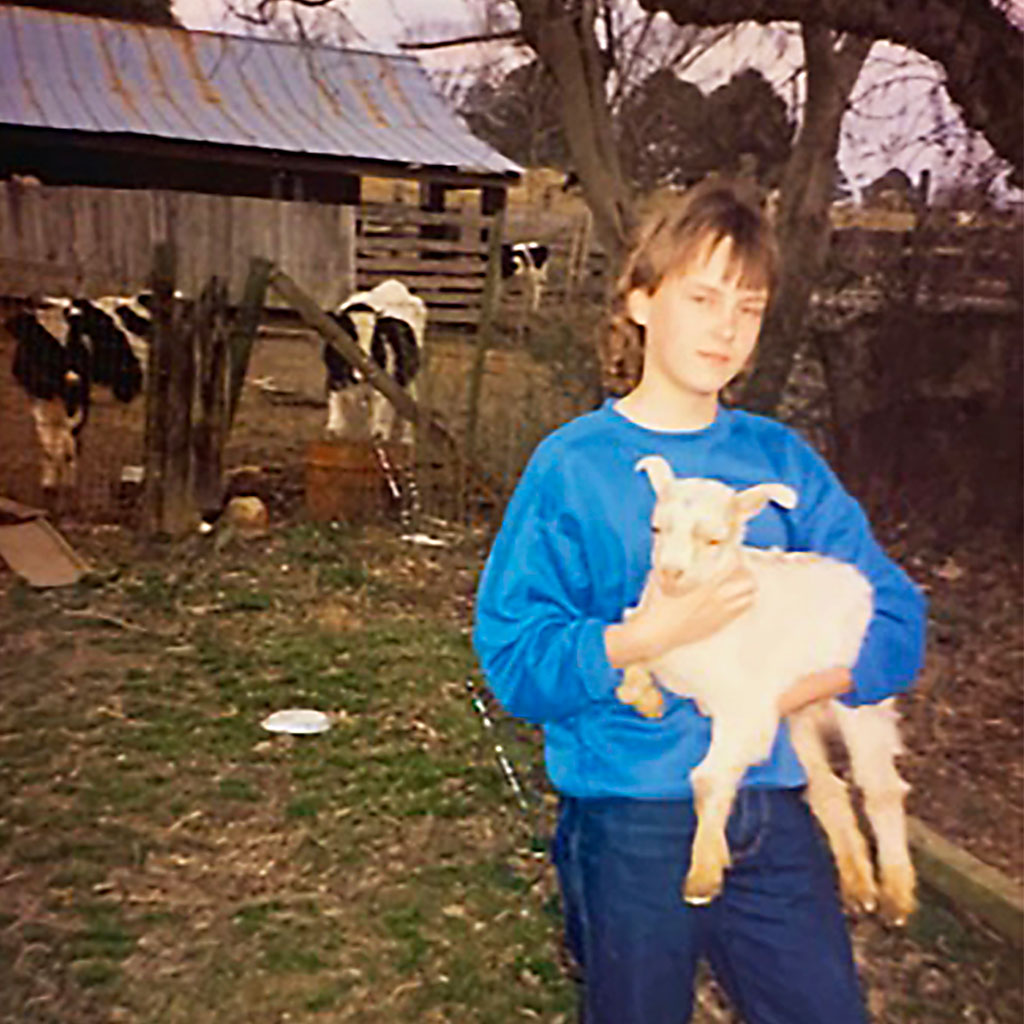
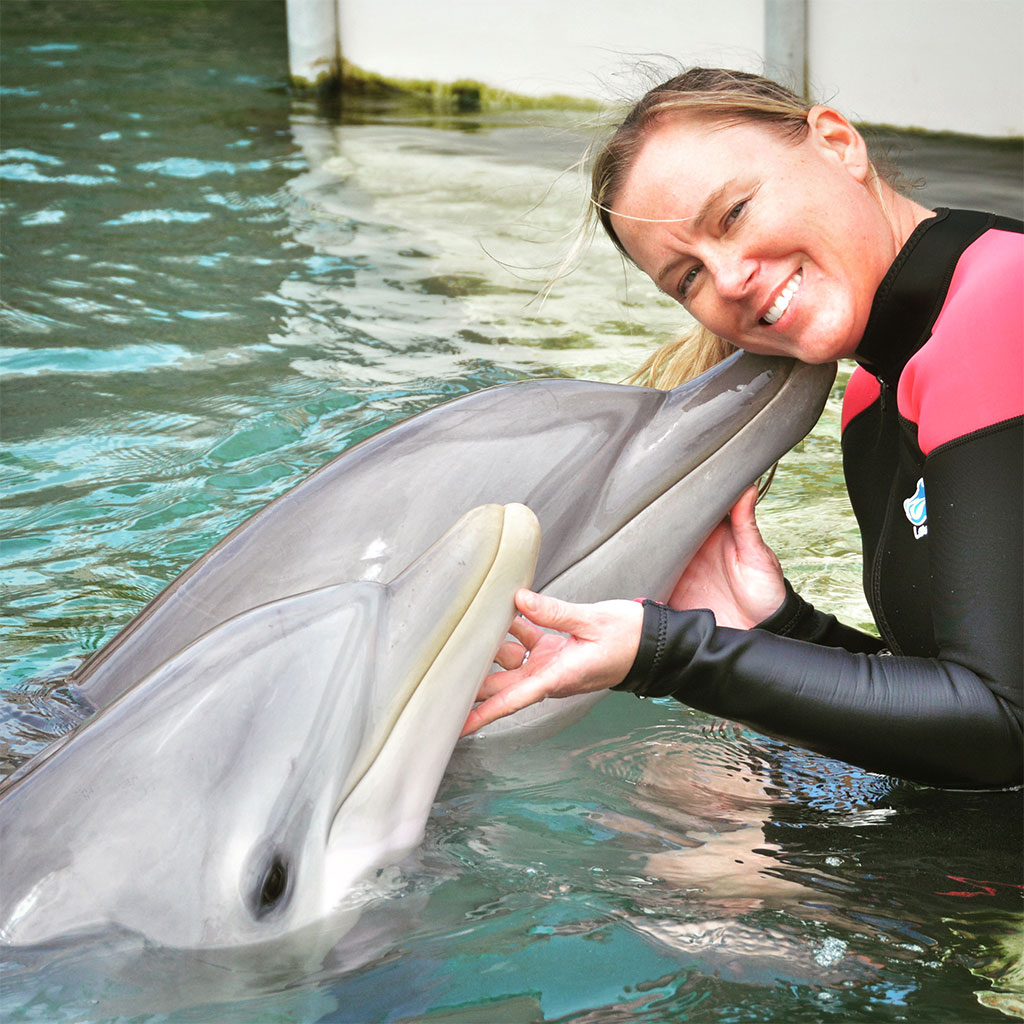
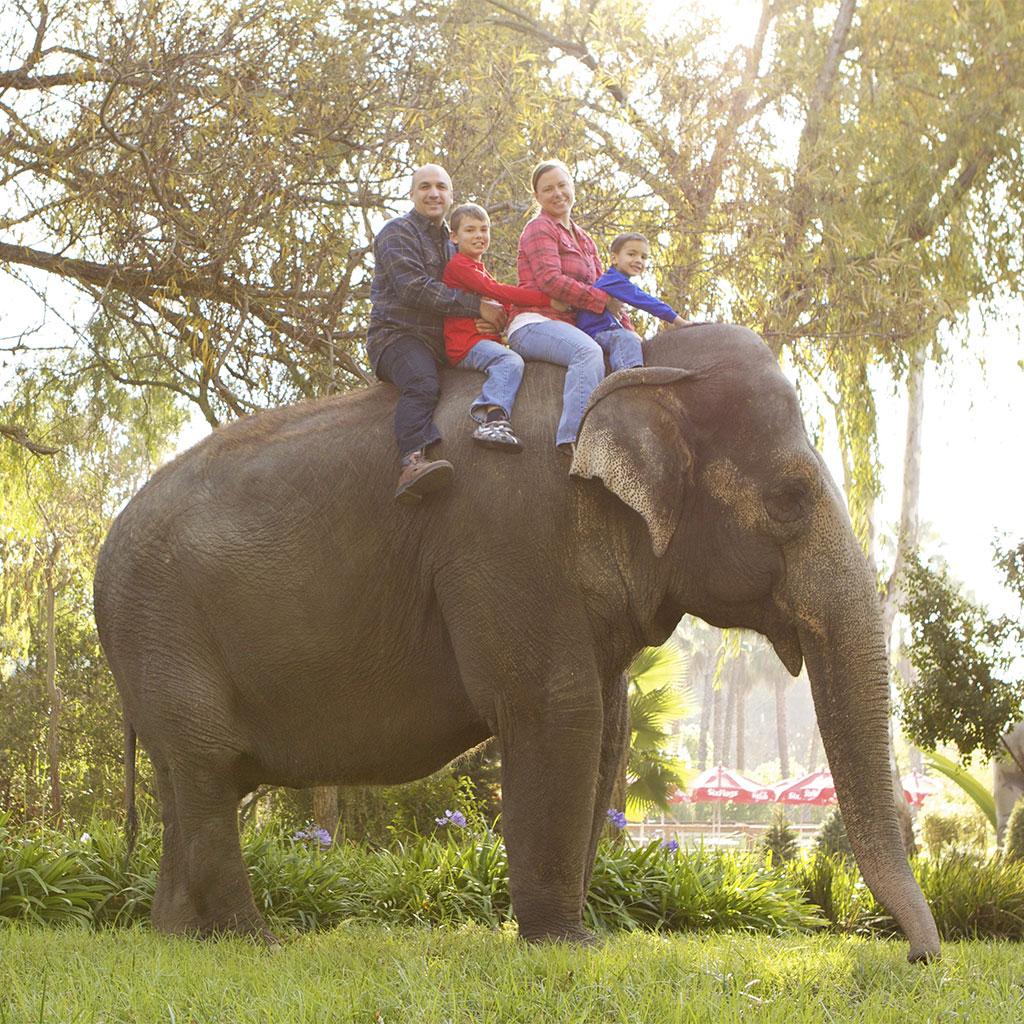
Holley Muraco’s lifelong love of animals began on her grandparents’ small farm in Potts Camp, where she grew up surrounded by livestock and first imagined a future in animal care (left/top). Muraco’s career in animal husbandry has included work with a variety of species—including bottlenose dolphins (center)—and has taken her and her family around the world (right/bottom).
Making a Splash
Through her position with MSU, Muraco tackles some of Mississippi’s most vexing marine-life problems while making new discoveries and publishing it all to benefit the wider field of marine-animal science. She credits her early career and experiences across the globe with giving her necessary perspective to help identify the state’s research needs.
“Having been away from Mississippi for so long, I developed a huge new appreciation for the state and can see it now with almost an outsider’s perspective,” Muraco said. “One thing I now recognize is that there’s still so much we need to understand about our coastal habitats and the marine animals that live there.”
For instance, she said, Mississippi has a population of sperm whales that live off the Coast—something many don’t know and that hasn’t received a lot of study. The state’s Coast also has one of the world’s largest populations of bottlenose dolphins, which she notes has received only a fraction of the scientific attention and research dollars that places like Florida receive, even though those are smaller geographic areas with smaller populations of the species.
“The Mississippi Sound is huge and home to an amazing number of species. There are 21 species of marine mammals alone in the northern Gulf,” Muraco explained. “Our coast just hasn’t received the same attention as others.”
To help address that imbalance, Muraco is exploring the use of uncrewed aircraft, or drones, to better understand what’s happening in the murky, turbid waters of the Mississippi Sound. While river input muddies the waters and prevents bare-eyed observation of underwater animal behaviors, drones equipped with thermal cameras can “map” the activities.
Muraco first used the technology with a known, trained dolphin pod to explore the effectiveness and accuracy of the thermal mapping.
“The thermal imaging shows us the ‘footprints’ of the dolphins, kind of like the Marauder’s Map from Harry Potter with these dolphins leaving long trails showing where they’ve been,” Muraco explained. “We can understand what they’re doing underwater even though you can’t see it with your own eyes.”
She also has used drones to prove the presence of manatees and obtain footage of the first confirmed incident of manatee mating in Mississippi. While this confirmation of sea cows in Mississippi waters is news, Muraco hypothesizes that the buoyant mammals have been here a while—likely unseen due to the low visibility of the water.
“I’m trying to get people to understand that we live in an amazing place—a very productive place,” she said. “The Gulf Coasts of Alabama, Mississippi and Louisiana are sometimes called the Amazon of America because of that biodiversity, and our coast is the most dynamic of those estuary systems because of all the river input.
“By taking care of and studying that biodiversity, we can ensure it continues to thrive,” she added.
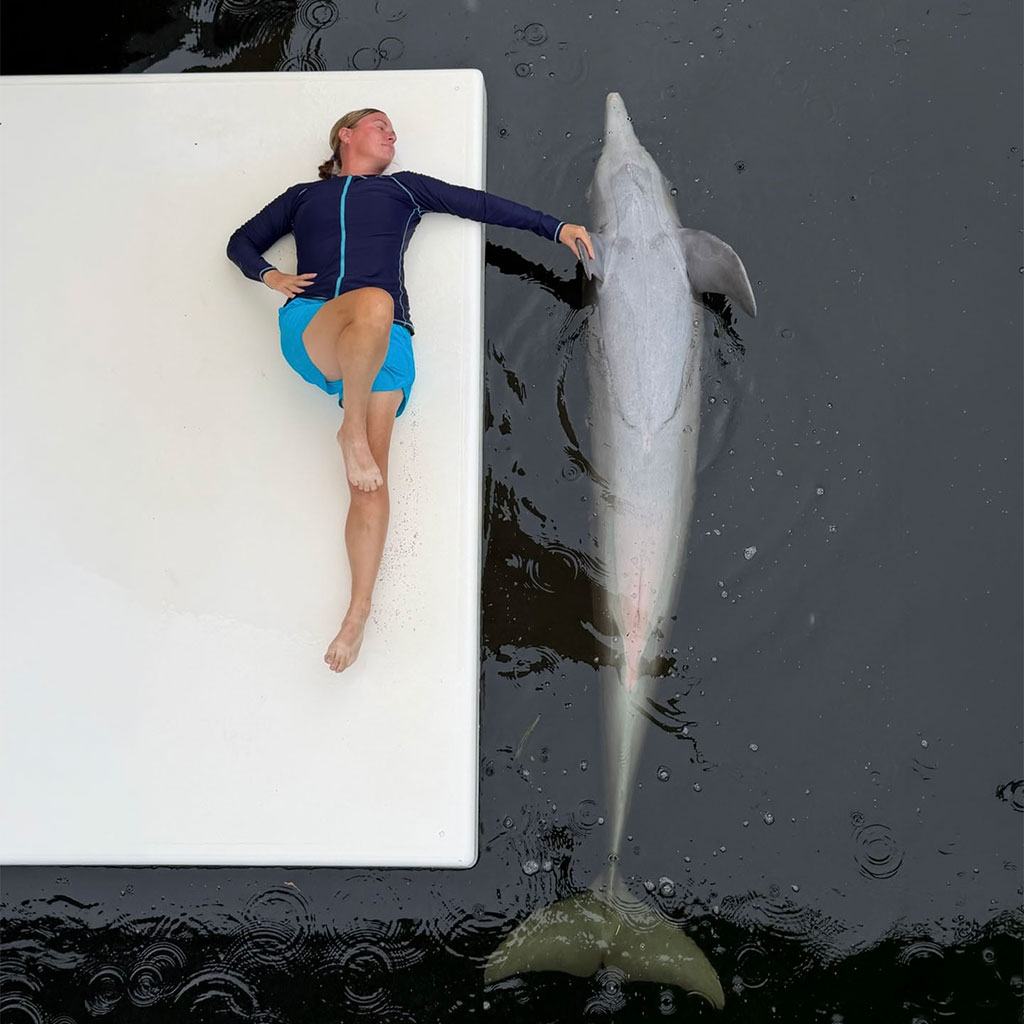
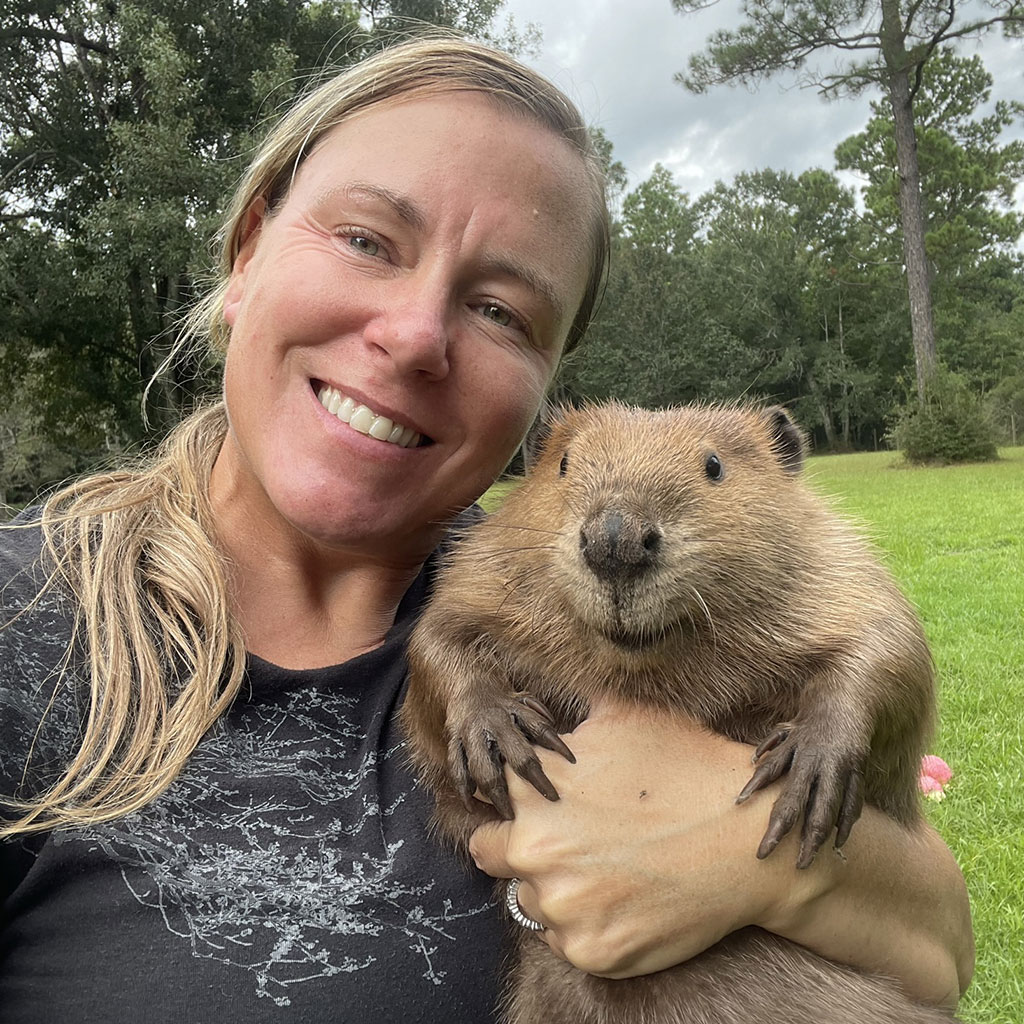
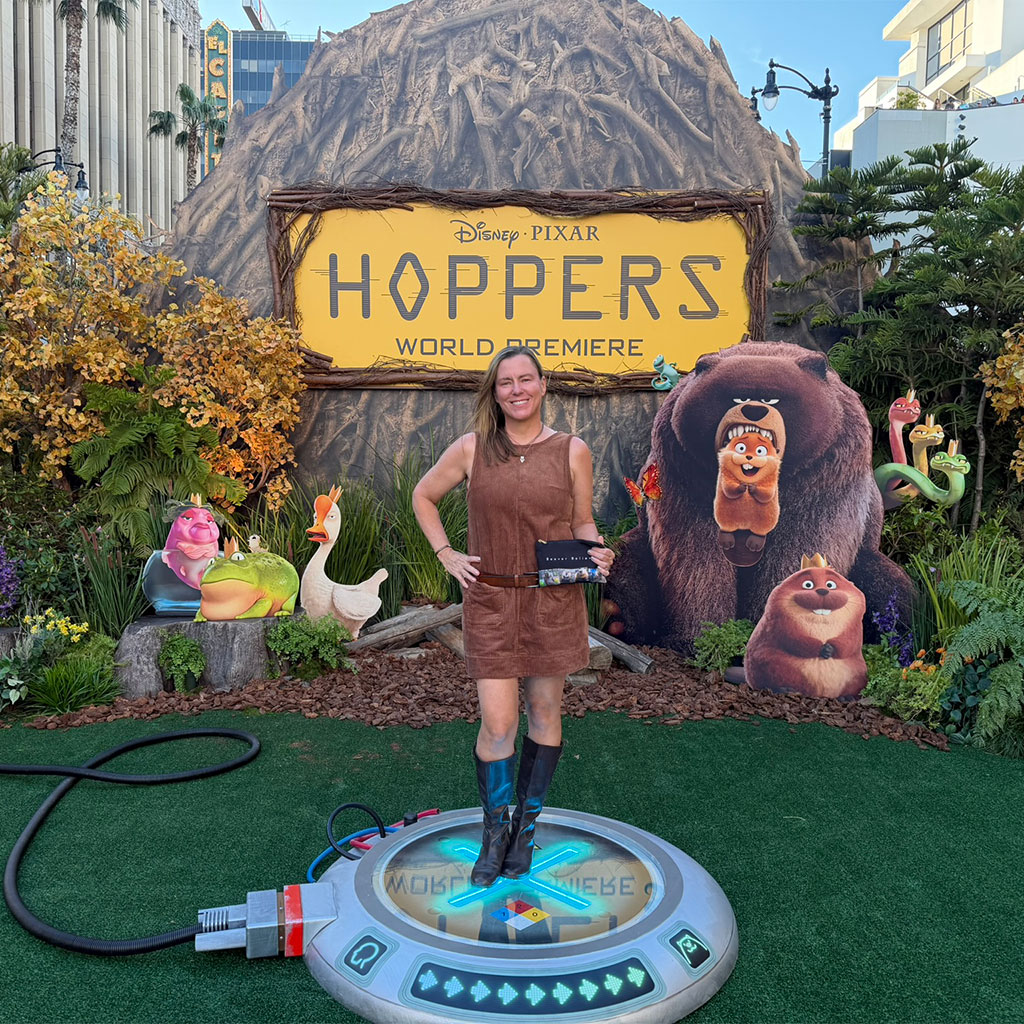
Much of Muraco’s work, including the research that fueled her doctoral degree, has centered on bottlenose dolphins (top), but her newest undertakings involve North American beavers. A licensed wildlife rehabilitator, she found viral fame as she nursed a beaver kit named Tulip (center) back to health. That platform allowed her to partner with Disney to promote the movie “Hoppers” (bottom) and spread the message of One Health.
‘Hopping’ into One Health
Muraco said understanding the complex coastal ecosystems and maintaining their balance is part of One Health—a World Health Organization initiative that recognizes the interconnectedness of human, animal and environmental health and works to understand that relationship for better disease control.
For example, Muraco said dolphins are a good indicator of water quality. If their health declines, it can indicate an unhealthy water system. Those harmful conditions could affect humans if they drink or play in the water or consume its fish. It could also indicate the presence of zoonotic diseases, which are illnesses that spread between animals and humans.
To help increase understanding of the One Health mission, Muraco is starting a Coastal One Health program. She even returned to her Disney roots to help promote that message through a partnership with the studio’s new movie “Hoppers,” which “stars” beavers.
A licensed animal rehabilitator, Muraco gained Disney’s attention due to the viral popularity of Tulip, a beaver pup she rescued and nursed back to health. With a built-in beaver-loving audience, she used her social media to promote the animated movie, which through traditional Disney humor and child-friendly themes, explores the importance of keystone species to the health of the environment.
“The song ‘We’re All In This Together’ is one of my favorite parts of ‘Hoppers,’ and there’s probably no better poster child for that than the beaver,” Muraco explained. “It’s considered a nuisance species in the South, but they are native and important to a healthy ecosystem. We have to learn to coexist with them when possible because beavers help ensure a healthy habitat. A healthy habitat means the environment can support the deer, turkey, ducks and fish that people like to hunt.
“If we can let them do their thing, these natural, environmental caretakers do such a better job at maintaining the environment than us,” she continued. “‘Hoppers’ does a great job of explaining that.”
Though the six beavers currently in her care had to stay home, Muraco was invited to the world premiere of “Hoppers” where she walked the red carpet with celebrities and other prominent figures from the world of animal health.
A Hollywood movie premiere might seem a world away from a small farm in Potts Camp, but Muraco said it’s part of her journey and a testament to how far a little curiosity can take you.
“If you’re not afraid to take chances, you never know what you might end up doing,” Muraco said. “I was blessed to be able to travel the world and learn so much. Now, I get to share that with Mississippi State students and help people understand how important Mississippi’s waters are.”
By Susan Lassetter, Photo by Emily Grace McCall and Submitted
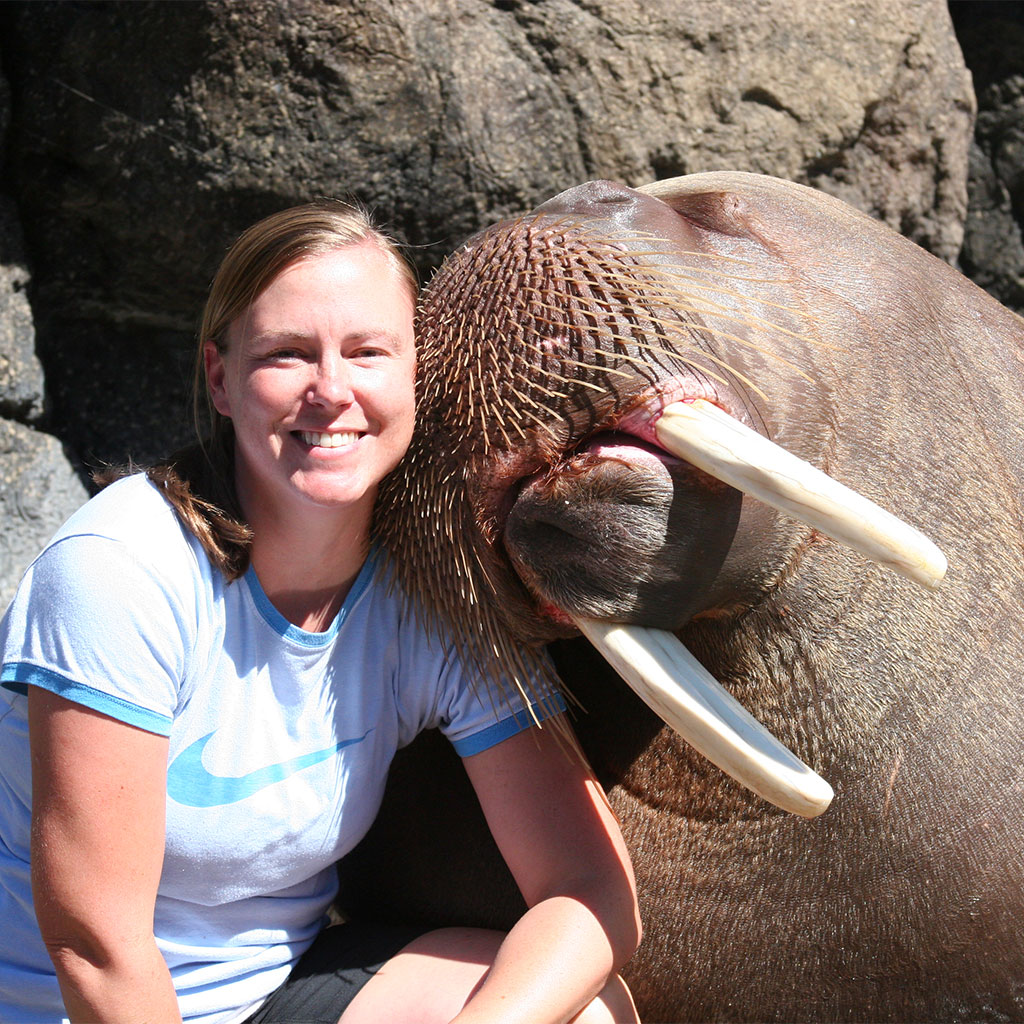
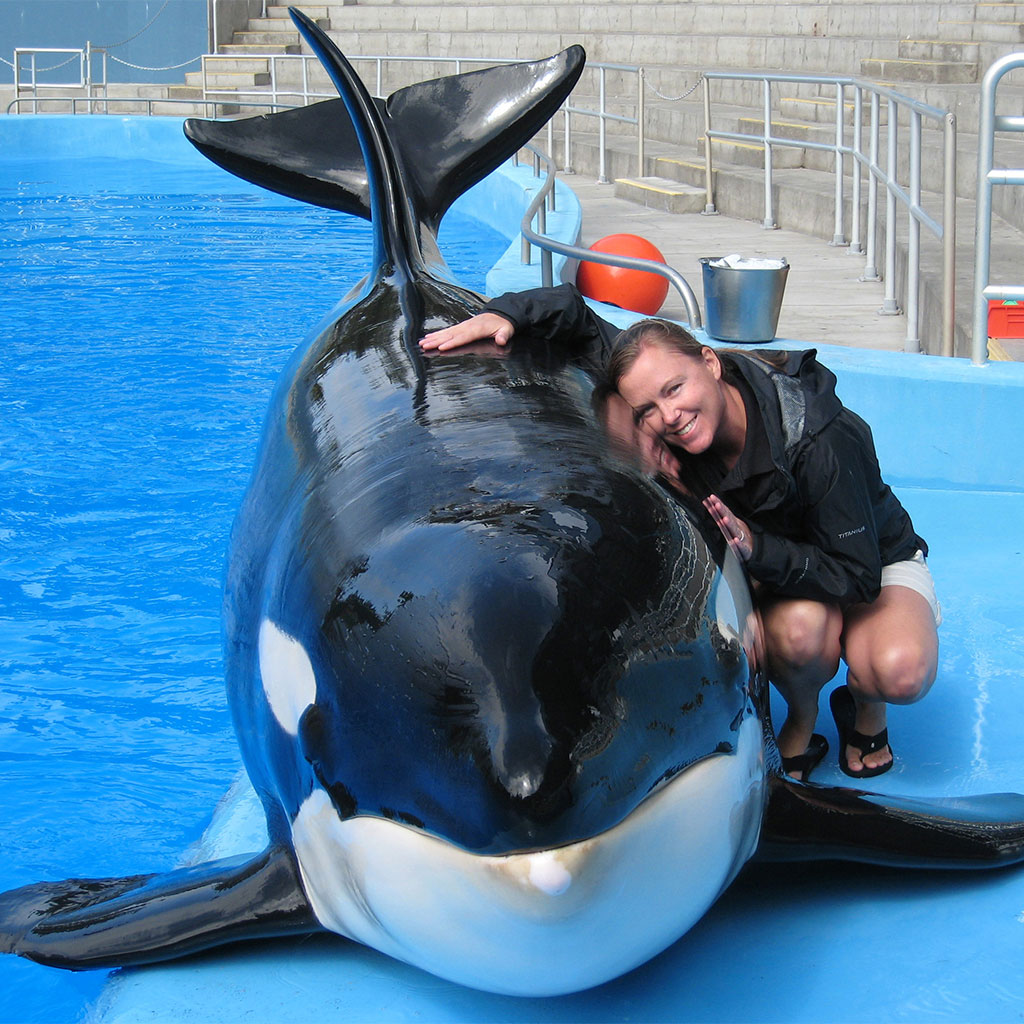
Through an internship at Walt Disney World, Holley Muraco discovered her passion for animal husbandry—specifically the care and research of marine animals. After earning a bachelor’s degree from MSU, she turned that passion into a career that has brought her into contact with a remarkable range of species and a variety of environments across the globe.
In the past 25 years, more than 600 Bulldogs have participated in the highly competitive Disney College Program, just like Holley Muraco did in 1996. In that time, Mississippi State students have “made magic” in a variety of guest-facing positions that include attractions, merchandise, food and beverage, and even performance roles.
Jeff Hickman, senior manager for Disney programs, said while their interns may go on to find careers in other industries, working at the Happiest Place on Earth provides not only a unique work experience but also a resume entry bound to catch attention.
“The Disney College Program is truly the definition of a life experience,” Hickman explained. “Our past participants are not shy about sharing the profound impact the program has had on them. Our program alumni soar to successful careers in a multitude of industries, and I’m so very proud of the impact we get to make every day.”
Hickman said the program’s success in finding impactful cast members at Mississippi State has kept the company coming back to campus to recruit. But the House of Mouse isn’t the only employer helping Bulldogs earn their cheddar.
Each semester, MSU’s Career Center helps students find internship and cooperative education positions to match their career goals, fit their financial needs and provide immersive experiences that flesh out a resume and provide real-world, hands-on learning.
“We continue to hear about the value of internships from employing organizations as students enter the job market,” said Bethany Mills, Career Center executive director. “These hands-on experiences not only enhance the students’ resumes but also help sharpen the skills needed to thrive in the workplace. The Career Center takes pride in playing a small role in helping our students achieve career success.”
To get started, students can create an account through the center’s Connections portal that links job seekers with opportunities. They also can search through active job listings on the Career Center website.
Mills said the center also offers opportunities for Bulldog alumni to support current students and recruit to fill vacant positions in their industries. The center’s Bulldog Mentor Program connects alumni to students with similar interests, allowing past generations of MSU graduates to help future generations find their paths. Employer accounts on the Connections website allow alumni to post job openings and become involved in on-campus recruiting events.
The MSU Career Center Partner Program helps employers form more formal partnerships with the university, which not only support the center’s endeavors but also provide partners with enhanced visibility and recognition at events.
The Career Center also maintains a gift-backed Summer Internship Support Fund that enables more students to pursue internship experiences by providing $500-$2,000 grants to offset the costs associated with experience-based student employment.
To learn more or to support the MSU Career Center’s programs, visit www.career.msstate.edu or contact Bethany Mills at 662.325.3355 or bmills@career.msstate.edu to get started.