

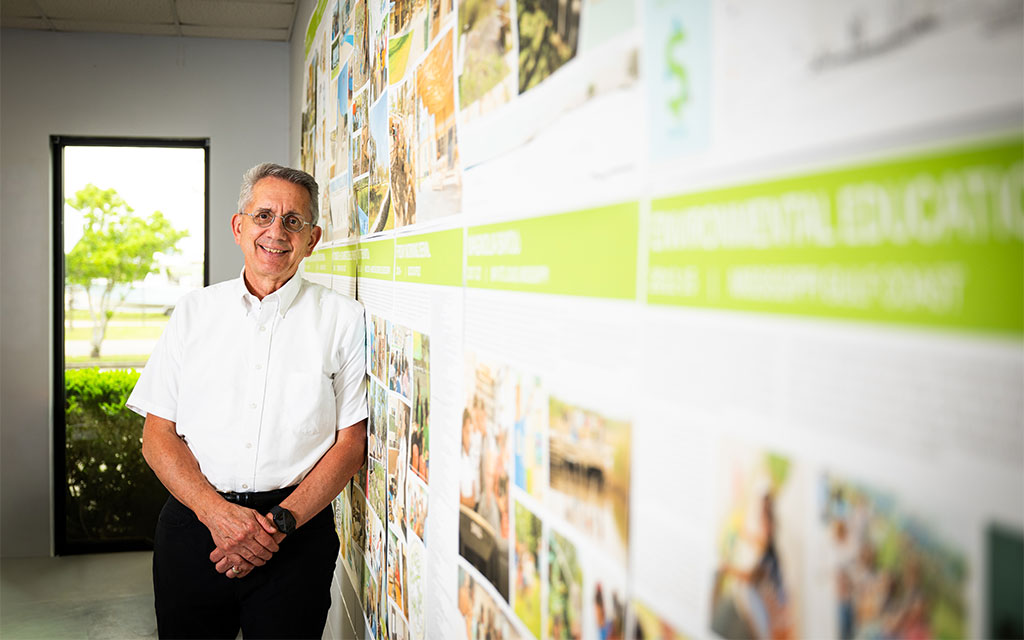
David Perkes, director of Mississippi State’s Gulf Coast Community Design Studio, has worked alongside Turkey Creek residents since 2013 to develop long-term strategies that support the historic community’s preservation and resilience.
In 1866, a group of formerly enslaved individuals on Mississippi’s Gulf Coast established a community where they could build a future on their own land. Now, 160 years later, Mississippi State University has partnered with the once prosperous community to ensure its future and preserve its history.
Known as the Turkey Creek community, the area consists of a 320-acre section of wetland along its namesake waterway in present-day Gulfport. It started with a church, school and modest homes, built by families who supported themselves—even prospered—by farming and working in the forest products industry.
That changed in the late 20th century when economic growth along the Mississippi Coast saw the Turkey Creek community fall victim to neglect and urban encroachment. Interstate highways, an airport and new retail stores began to press against the once isolated settlement. By 2001, Turkey Creek found itself on the Mississippi Heritage Trust’s “Ten Most Endangered Historic Places” list.
Then Hurricane Katrina had her say. Floodwaters unmasked mounting problems in the community including erosion, poor water quality and unsteady structures, further imperiling its future. Two years later, Turkey Creek was named to the National Register of Historic Places. Despite that designation and being adjacent to the Coast’s hub of trade and tourism, it still lacked the support needed to preserve its history and improve its resilience to the impacts of nature and humanity.
That began to change in 2013, when David Perkes, longtime director of MSU’s Gulfport-based Gulf Coast Community Design Studio, began a collaboration with Turkey Creek residents to help revive the community.
“Disinvestment in low-income neighborhoods is not unique to the Mississippi Coast, but the fragmentation caused by Hurricane Katrina has lingering effects on our communities today,” Perkes said. “That’s why we began partnering with Turkey Creek residents to develop a long-term community improvement plan.”
As part of those ongoing efforts, Department of Landscape Architecture and Environmental Design Assistant Professor SaMin Han and Professor Chuo Li joined Perkes to create a graduate-level landscape design course meant to help address the Turkey Creek community’s needs. Grounded in scientific analysis and community engagement, the studio course gives students real-world experience in creating water-management solutions while supporting Turkey Creek’s mission of resiliency and historic preservation.
The course builds on the Gulf Coast Community Design Studio’s practice of bringing students to the Coast to assist with projects that tackle the region’s omnipresent challenge of flood risk and stormwater management.
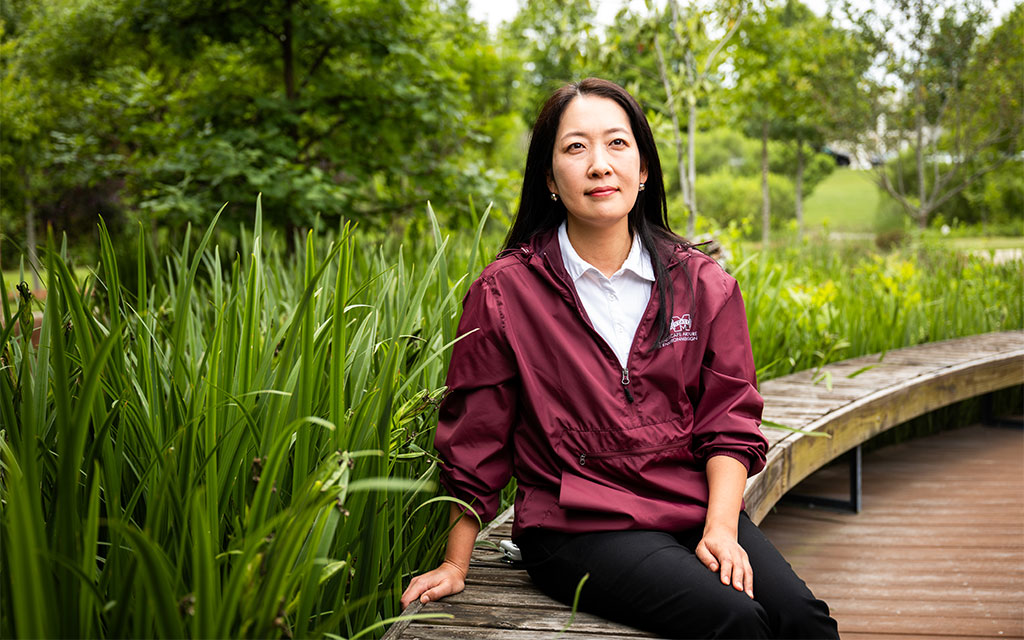
SaMin Han, holder of the Michael L. and Mary B. Hatcher Endowed Professorship, guides students in creating landscape design solutions that support Turkey Creek’s future while honoring its history.
Throughout the semester, Han’s students applied their research to create a deliverable, professional proposal, using specialized software to analyze the landscape and construct a landscape-design prototype. They then presented their community-ready proposals and justified their strategies through a public exhibition and formal presentation to community stakeholders.
“The work in this course goes beyond a typical classroom design exercise,” explained Han, MSU’s Michael L. and Mary B. Hatcher Endowed Professor. “Our students conducted field visits, community interviews and site observations to better understand the lived experiences of neighborhood residents. Those conversations and observations allowed them to develop plans and help residents visualize possible futures for Turkey Creek.”
Mississippi State received support for the project as one of only eight universities nationwide awarded the inaugural Envision Resilience National Design Studio Grant, established to support immersive student projects that blend climate science modeling with history and public policy.
“This recognition reflects both the strength of our interdisciplinary approach and the urgency of the issues we are addressing on the Gulf Coast,” Han said.
Along with the interdisciplinary academic know-how and experience in practical application, MSU also consulted with partners from the Land Trust for the Mississippi Coastal Plain and Audubon Mississippi, which provided insight for protecting the natural and cultural resources of Turkey Creek and its watershed. Derrick Evans, founder of Turkey Creek Community Initiatives, coordinates with the university on behalf of the historic community and ensures the residents’ voices are heard.
“Having a network of local and statewide partners makes this collaboration especially meaningful,” Han said. “The partnership with Turkey Creek has given our students an experience that can’t be simulated in the classroom.
“It allowed them to work with a real community, facing real challenges, and taught them not only design skills but also how to listen, how to build trust, how to work across disciplines and how to understand a place through the people who live there,” she continued.
Perkes said the Turkey Creek project, and the Gulf Coast Community Design Studio as a whole, are integral parts of Mississippi State’s network of resources dedicated to Mississippi’s Coast.
“Mississippi State sees the value of the Gulf Coast as a key part of the state economically, culturally and environmentally,” he said. “Projects like this enable MSU to create a local impact while expanding knowledge and applied research to address global problems—a true example of the far-reaching effects a land-grant institution can have on the world.”
By Meg Henderson, Photos by Grace Cockrell
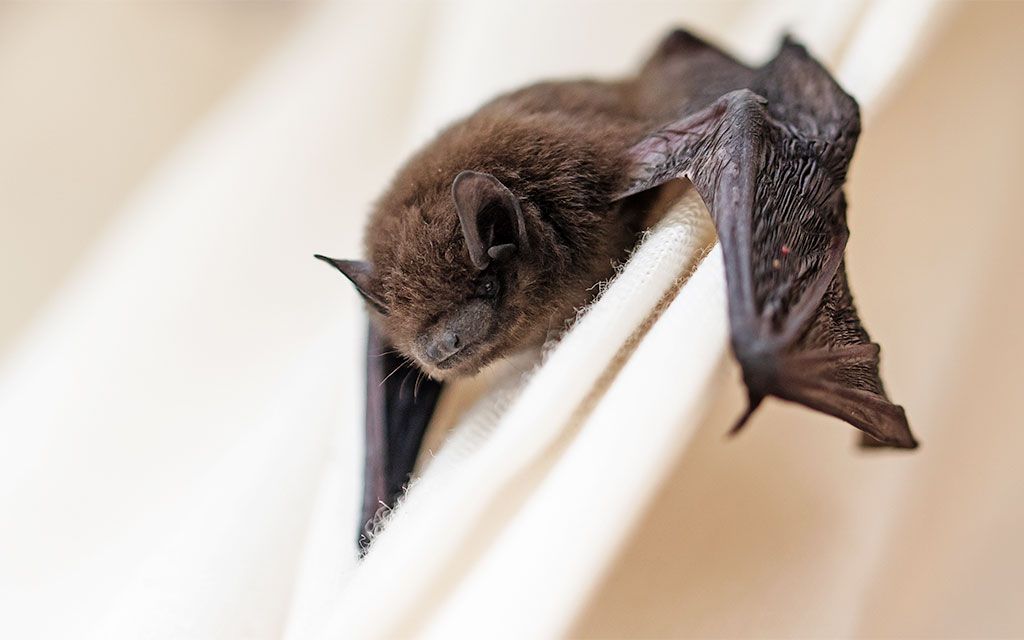
Extension takes bats under its wing
Having resilient communities doesn’t just mean having infrastructure that can weather what nature dishes out. It also means supporting the local ecosystem and native species.
“One of the principles of resilience is redundancy, which in the natural world means biodiversity,” explained David Perkes, director of MSU’s Gulfport-based Gulf Coast Community Design Studio. “A diverse system is more resilient, so understanding how different species affect our environment is important to a strong community.”
To help better understand biodiversity along the Mississippi Gulf Coast, the MSU Coastal Research and Extension Center’s Master Naturalist program has launched a community service project focused on monitoring bat populations.
Extension Associate Mandy Rigsby said Mississippi is home to 14 species of bats. The project’s goal is to identify how many and which species use bat houses in Hancock, Harrison and Jackson counties—data that, when applied, can help boost the numbers of the winged insectivores.
“Mississippi’s bats provide an invaluable service as nature’s pest control. They protect our forests, crops, livestock and even humans from disease-carrying insects,” Rigsby explained. “Unfortunately, they are very misunderstood, and people don’t realize they can and should help support the bat population.”
Rigsby said bat roosts keep their populations stable by providing protection from weather and predators, as well as a place to raise young. Natural roosts include caves or trees, but bats will also roost in man-made structures such as buildings, bridges or culverts.
You can encourage bats in your backyard by placing a bat house in your landscape. Both premade bat houses and building plans for DIYers are available online.
Rigsby offers the following advice for maintaining a successful bat roost at home:
Make sure your bat house is sized appropriately for the species native to your area. Your local Extension office can help you with that information.
Larger bat houses offer a greater temperature range, allowing the mammals to find a space that meets their needs.
Multiple houses of varying colors, sizes and sun exposure can make your efforts more successful.
Avoid mounting your bat houses on trees as these are vulnerable to predators. Place them on buildings or free-standing poles instead.
Be patient. It can take six months or even years for bats to establish a successful colony in a bat house.
Use winter months to clean or repair your man-made roosts to keep bats healthy and protected.
Live in one of the included counties and want to get involved? Click here to learn more.