


Frances Hodgins (B.S. education, ’57) 96, Tuscaloosa, Alabama — A native of Neshoba County, she earned an associate degree from East Central Junior College before moving to Starkville where she graduated from MSU and raised a family. She was an accomplished pianist and devoted time to her church. She also taught English as a second language, or ESL, in the Golden Triangle and tutored many international students. — Jan. 19, 2026
Glenn Stone (B.S. agriculture, ’70) 78, Brandon — He was a member of Phi Kappa Tau while at State and returned to his hometown of Clarksdale following his graduation. He began his career as a systems analyst at Coahoma County Bank. In 1979, he moved to the technology and analytics department of what was then the Deposit Guaranty Bank in Jackson. He later worked at Trustmark Bank, Premier Bank in Baton Rouge, Louisiana, and BancorpSouth in Tupelo before retiring in 2014. — March 18, 2026
Clayborne Dudley Taylor (B.S. physics, ’61) 87, Starkville — A native of Kokomo, he attended Pearl River Community College on a music scholarship before transferring to MSU. He later earned master’s and doctoral degrees in physics from New Mexico State University. He spent his career as a university professor, holding positions at the University of Mississippi, Mississippi State and Ohio University. He was an active researcher and consultant, and held leadership positions. — March 18, 2026
Bradford J. “Brad” Tucker (B.S., M.S., Ed.D. education, agriculture, school administration, ’49, ’55, ’72) 99, Decatur — A native of Leake County, he joined the Navy out of high school. He served in the Pacific from 1944-45 aboard the USS Winston. He graduated from what was then East Central Junior College before coming to MSU. He began teaching in Yazoo City in 1949 then returned to East Central in 1951. He was named academic dean in 1961 and remained in that role until his retirement in 1991. He was a charter and senior member of the Mississippi Junior College Deans Association. He was named Alumnus of the Year by what is now East Central Community College in 1987 and was honored with the renaming of its Applied Technology Center in his name in 1991. He was a past president of the Decatur Exchange Club, past master of Evergreen Masonic Lodge and past chairman of the Deacons at Clarke Venable Baptist Church. — Dec. 26, 2025
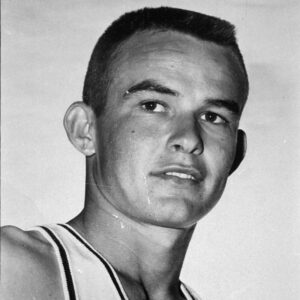
In Memory of Doug Hutton
Doug Hutton, a multi-sport Bulldog standout, died May 9. He was 84.
A graduate of Clinton High School, he excelled in basketball, baseball and track. He broke the Mississippi record for scoring the most points in a high school state championship game with 54 points in the 1960 finals. The record he broke was his own, set earlier that day in a semi-final.
Hutton was recruited to Mississippi State by coach Babe McCarthy. He turned down a minor league baseball contract from the Baltimore Orioles organization to accept the MSU scholarship.
While at State, Hutton lettered all four years in basketball, posting a career of highlights including SEC Championships in 1962 and 1963. In 1963, he was part of MSU’s first NCAA Tournament bid that saw MSU sneak out of the state under the threat of arrest to face eventual national champions Loyola University, Chicago. The contest, the first in which a team from Mississippi played an integrated team, became known as the “Game of Change.”
Hutton was a 1964 All-SEC third-team guard and led Mississippi State in scoring for basketball. On the diamond, he was a pitcher and earned MVP honors and a spot on the All-SEC Western Division team in 1963 with a 5-0 record, 2.15 ERA and 38 strikeouts. In track, he won SEC outdoor championships for the 4×110 relay in 1962 and 1963.
Following his 1965 graduation with a bachelor’s in physical education, he stayed at Mississippi State as a graduate assistant and freshman basketball coach while he worked toward completing a master’s in physical education in 1969. He then began a high school coaching career as a basketball and baseball coach at Hazlehurst High School before spending 14 years at Florence High, where he earned state titles in both girls’ and boys’ basketball. Hutton spent the remainder of his 32-year teaching and coaching career at his alma mater, Clinton High, where he coached the team to a baseball state championship.
Hutton earned Coach of the Year honors in 1989 and holds a place in the Mississippi Sports Hall of Fame, Mississippi State Sports Hall of Fame and the Mississippi Association of Coaches Hall of Fame. He was also honored as an SEC Basketball Legend.

Remembering Clyde Muse
Clyde Muse, who served as president of Hinds Community College for 42 years, died April 15. He was 96 years old.
Often called the “Godfather” of Mississippi’s community colleges, he retired from Hinds in 2020. Throughout his presidency, he was at the forefront of establishing community colleges as the primary workforce training entities in the state. Muse and his wife, Vashti, who died in 2010, were known as champions of the underdog who fought for equitable education opportunity.
A native of Benton County, Muse attended East Central Junior College in Decatur, which he paid for with a job milking cows before joining the basketball team and securing a campus job. He then earned another basketball scholarship from Delta State Teachers College, where he met his wife.
Muse became a teacher and coach at Canton High School before moving to Starkville in 1959. While teaching and coaching the 1961 state champion boys’ basketball team, he earned a master’s in school administration from MSU. He later became principal at Starkville High School and assistant superintendent.
He completed a doctoral degree in administration, with a dissertation on early childhood education, from MSU in 1969 and was named superintendent of the Hinds County school system, the second-largest in the state at the time. During his two years in that position, Muse guided the system through the turbulent integration process.
In 1971, Muse then became superintendent in Meridian and led the district for seven years before returning to Raymond as president of Hinds.