

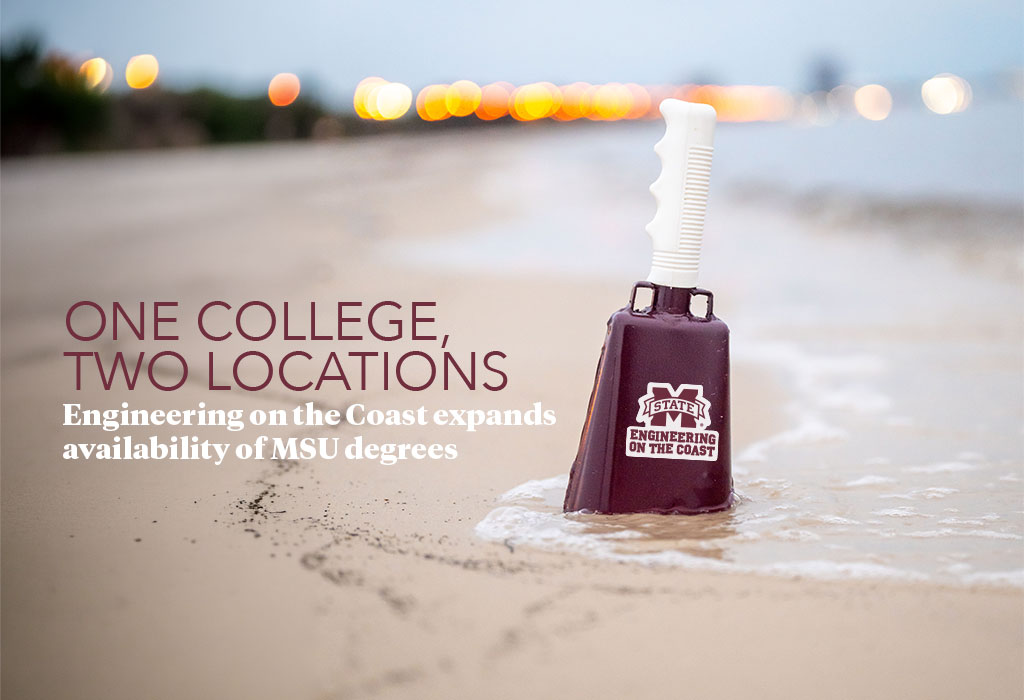
Engineering on the Coast expands availability of MSU degrees
For future engineers living on the Mississippi Gulf Coast, earning a degree in their field can happen in their backyard thanks to Mississippi State and Engineering on the Coast— an idea shaped by place as much as by purpose.
The program was the brainchild of MSU President Mark E. Keenum, who wanted to address Magnolia State industries’ need for more Coast-based engineers. Finding a solution required rethinking how an engineering curriculum is delivered, but from the beginning the vision was clear: one college, two locations.
“Mississippi State is uniquely called to serve the entire state, and that certainly includes the Coast,” Keenum said. “Engineering on the Coast exemplifies MSU’s commitment to meet critical needs and provide innovative, high-quality academic programs our students and Mississippi’s employers want and need.
“We’re grateful to have this opportunity to work with our friends and partners across the region to offer an outstanding engineering education,” he continued. “I also appreciate the world-class faculty and staff who teach, mentor and support our students as they earn their Mississippi State degree.”
Now in its 10th year, Engineering on the Coast brings the quality of MSU’s nationally recognized engineering education to the South’s coastal communities, putting an MSU engineering degree within reach of those whose roots and responsibilities keep them close to the Gulf.
Bagley College of Engineering Associate Dean Robert Green said ensuring the satellite program had the same rigor as the Starkville campus’ curricula was central to the development of Engineering on the Coast.
“We wanted everything to be in sync,” Green explained. “The idea was that the same courses offered in Starkville would be offered on the Coast, with students moving through the same degree programs, just in a different place and at times that would better serve the students on the Coast, many of whom are nontraditional students with full-time jobs.”
The program creates a pathway for transfer students to earn an MSU degree in either electrical, mechanical or industrial and systems engineering with just two additional years of study. Flexible course delivery—including a mix of in-person and online instruction—means students can fit their classes around the demands of work and family.
Green said this flexibility is opening the door to many who might not have otherwise considered an engineering degree, giving them career opportunities they wouldn’t have had.
“One of our recent graduates owns a business, and that business enabled his children to earn engineering degrees,” Green recalled. “He had always wanted to earn an engineering degree, too, but his business and family responsibilities meant he couldn’t move to Starkville to enroll.
“Engineering on the Coast gave him the opportunity to finally get that degree he wanted, which will allow him to expand the services his company offers,” Green explained.
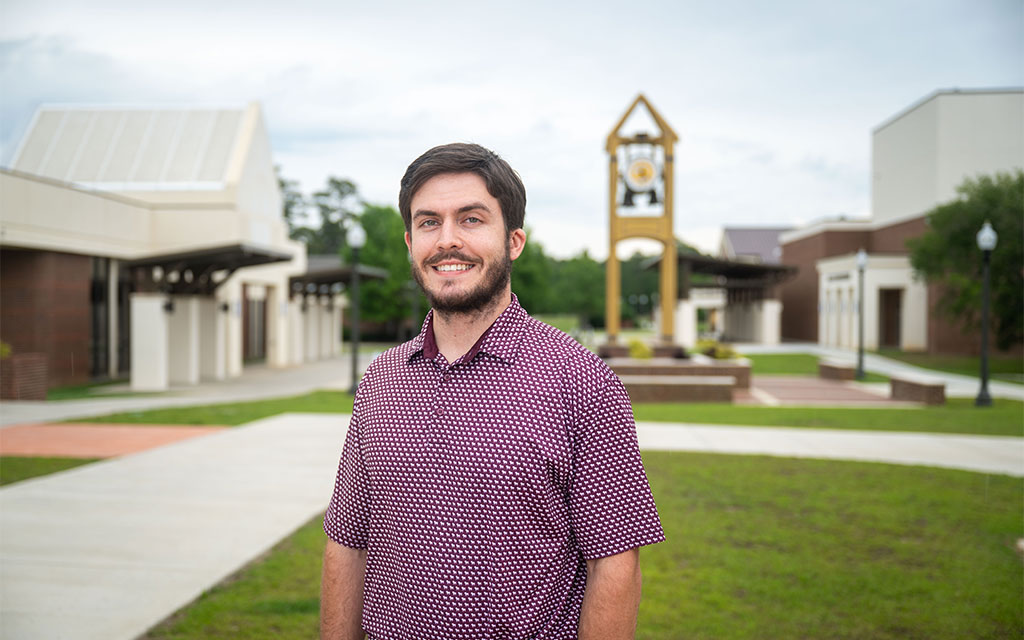
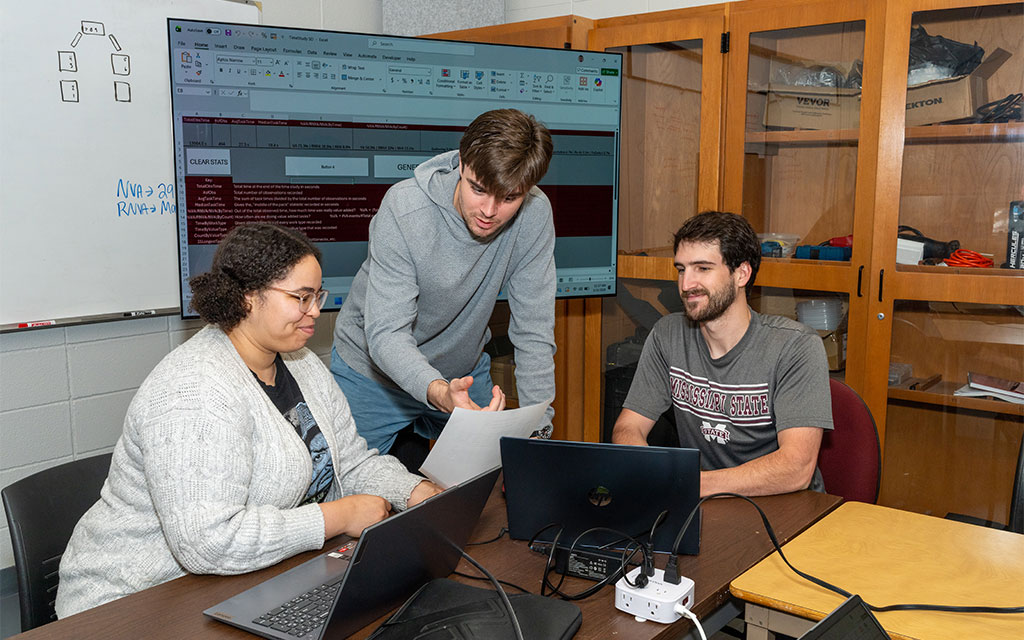
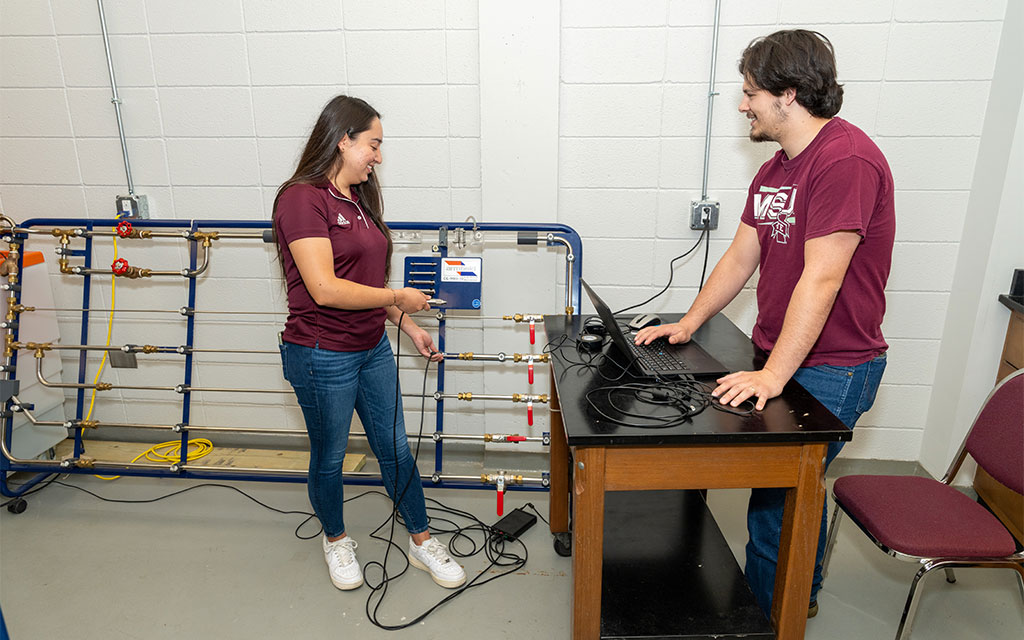
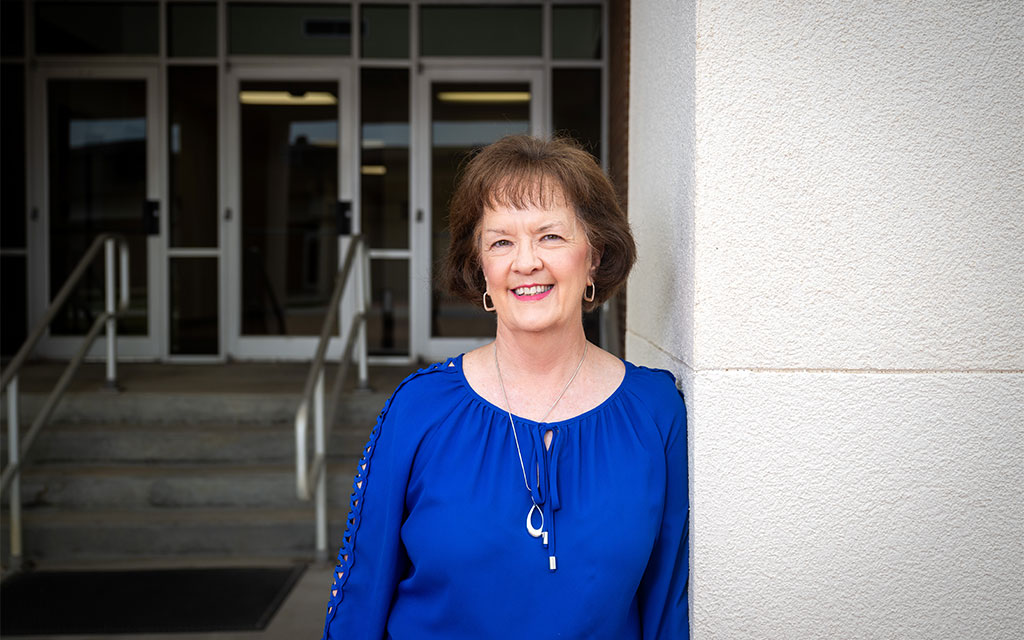
A decade after its launch, Engineering on the Coast continues to bring Mississippi State’s engineering education to the Gulf Coast through flexible delivery, hands-on learning and personalized support. Shown are alumnus Micah Fairley, upper left; students in the program; and program coordinator Deena Kuntz, lower right.
The program’s location on Mississippi Gulf Coast Community College’s Gautier campus makes it easily accessible for students from south Alabama, south Mississippi and Louisiana, as well as those who work for industries located in the region.
Micah Fairley said the proximity to home was his main reason for choosing Engineering on the Coast. After completing two years at community college, he seamlessly transitioned into MSU’s electrical engineering program.
With only a 45-minute commute from his home in Lucedale and the flexibility of taking night classes, he was not only able to work but also benefit from the cost savings of living at home, which he credits for allowing him to graduate without loan debt.
“It was a big deal to me to graduate without loans,” Fairley, a 2022 alumnus, said. “Engineering on the Coast made that happen.”
In addition to cost effectiveness, Fairley said the smaller campus appealed to him—helping him to find his footing as he moved through the demanding courses. Now, his sister is following in his footsteps. She is on track to graduate in mechanical engineering through Engineering on the Coast next year.
“I had a village,” Fairley said. “The faculty and staff were constantly working to make sure we had access to everything we needed, so our experience was as robust as the program in Starkville. The faculty and staff were always accessible, and the classes that streamed to us from Starkville were engaging, so we felt as much a part of the discussion as anyone.”
Deena Kuntz, Engineering on the Coast program coordinator, said that feeling of community and support is intentional and something they start to build before students enroll in their first class.
“We’re involved from the very beginning,” Kuntz explained. “From high school visits and facility tours to helping students stay on track while they’re completing those first two years of foundational work, we’re there every step of the way.”
Kuntz said Engineering on the Coast faculty and staff are available to prospective students, guiding them through the transition into the upper-level engineering coursework. That built-in advising ensures future students are on track and can connect with both educational and career opportunities.
Once enrolled, coastal students can find support for career readiness, with programs that include resume workshops, mock interviews and direct engagement with industry—just like what Starkville campus students can access. Kuntz also noted that working, Coast-based engineers serve as adjunct instructors, mentor students and participate in career-focused events giving students a clear picture of what their future careers may look like.
Some Coast-based industries’ support goes even further through direct investment in student opportunities and employment. Economy-defining organizations like Chevron, International Paper and Mississippi Power have partnered with Engineering on the Coast to support students and ensure talented local graduates are prepared to step into critical roles across the region.
“Engineering on the Coast is greatly enriched by our partners,” Kuntz said. “Their investment in our program and student-engagement opportunities help launch our graduates into highly sought-after engineering careers.”
For Fairley, these coastal connections led to a student internship with a local power utility, which informed and supported his capstone senior-design project. Now, he is a technical representative with Gresco, using his knowledge and experience to support power companies across Mississippi and Louisiana. He said he can trace his career success directly to his time with Engineering on the Coast.
“It kick-started my career and showed me that if you’ve got a good attitude and you’re willing to work, great things can happen for you,” Fairley said. “I love the Coast. I love taking care of it and being a part of it, so it’s a huge blessing to be so close to home.”
By Camille Carskadon, Photos by Emily Grace McCall & Submitted
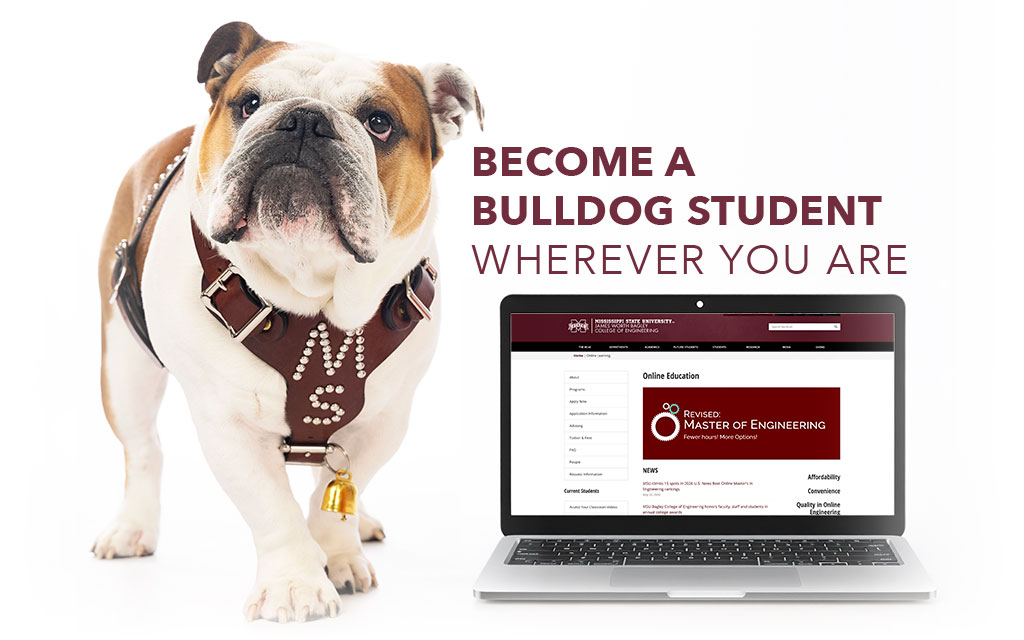
From VHS tapes delivered by mail in the 1980s to today’s satellite campuses and dedicated Starkville-based online classrooms outfitted with the latest recording and streaming technology, Mississippi State University has been educating students beyond the Starkville campus for decades.
In the Bagley College of Engineering, a continued partnership with Mississippi State Online allows students across the world, including active military and working professionals, to pursue degrees without relocating or pausing their careers.
Online students receive the same rigorous instruction as their on-campus peers while benefiting from flexible scheduling and technical support, as well as the same robust academic advising and career services available on campus. In addition to accessibility, MSU’s online courses are affordable as they maintain in-state tuition rates regardless of residency.
“Our online programs ensure even those who can’t come to campus have access to our nationally recognized programs, which can enhance their careers,” explained Robert Green, associate dean of academics for the Bagley College of Engineering. “If you have a job or family commitments that keep you from joining us in Starkville or on the Coast, our online programs may be the opportunity you’ve been waiting for.”
MSU’s online engineering degree offerings include:
Bachelor of Science degrees in electrical and industrial and systems engineering, and a Bachelor of Applied Science in cybersecurity
Master of Science degrees in aerospace engineering, artificial intelligence, chemical engineering, civil engineering, computational engineering, computer science, cyber security and operations, data science, electrical and computer engineering, industrial and systems engineering, and mechanical engineering, as well as a Master of Engineering and Master of Science in engineering
Doctor of Philosophy degrees in computer science, computational engineering, electrical and computer engineering, industrial and systems engineering, and engineering with concentrations in aerospace, chemical, civil, engineering education and mechanical engineering
These programs are among more than 100 degrees of all levels from a variety of colleges and specialties offered by MS State Online. The distance-learning unit also facilitates a number of professional certificates and endorsements for continuing learners.
To learn more about the Bagley College of Engineering, visit bagley.msstate.edu. Find more about MSU’s online degree programs across all colleges at online.msstate.edu.