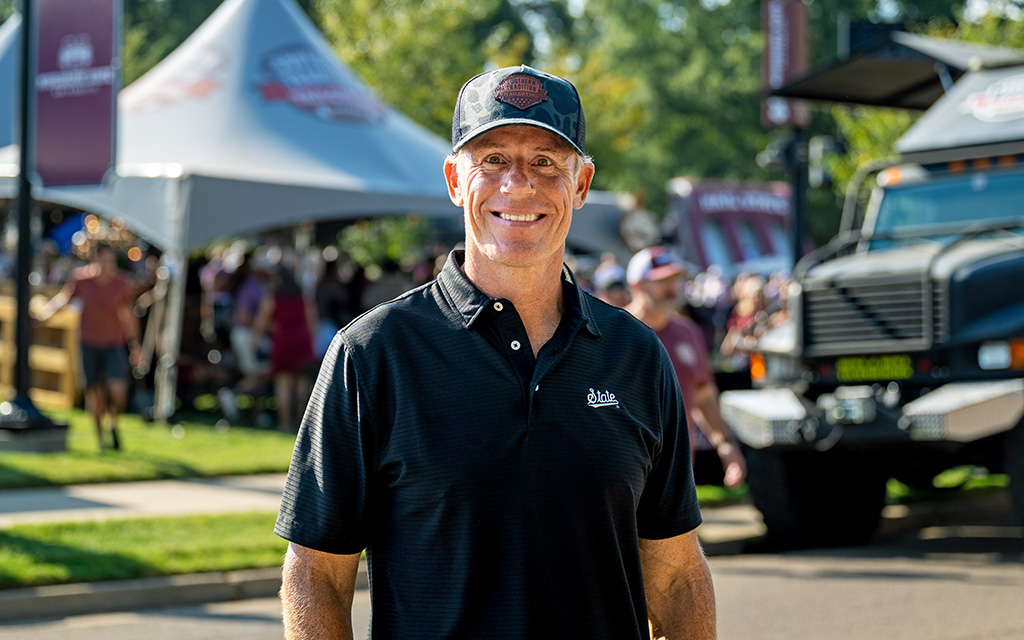
Vickers remains connected to sports through tailgating business, classroom lessons
Brad Vickers stood in Davis Wade Stadium 18 years ago exhausted, demoralized and ready to leave, but, in his own words, he “had nothing else to do.”
From the start of one of Mississippi State’s most infamous modern football games—2008’s 3-2 loss to Auburn—both teams struggled to move the ball. With each incomplete pass, stalled drive and turnover, Vickers and the 50,000-plus crowd grew increasingly annoyed.
For most of the game, Vickers weighed his options. He could have left the stadium to return to the tailgating area, where there was food and drink to be had, but there were no real entertainment options that would have held his attention for a few hours.
As the clock ticked down to a merciful end, Vickers had the beginning of an idea: What if he elevated the tailgate experience and made it more of a destination instead of merely a place to kill time until kickoff?
“I remember thinking to myself, ‘There’s got to be a better option than this,’” the MSU kinesiology professor said. “That’s when the wheels started turning.”
Though flat-screen TVs and portable satellite equipment became more affordable in the mid-2000s, tailgaters were not early adopters. That’s where Vickers saw an opportunity.
“At the time, I would have loved to have had that equipment, but there was no way my wife was going to let me purchase it. I realized if I organized it as a business, she might let me give it a shot,” he said with a laugh. “If it works, great. If not, I can set up my own tailgate with everything I’d need to have a good time.”
A year later, Vickers’ Southern Tradition Tailgating (STT) began bringing good times to Bulldogs on Saturdays outside of the stadium. Today, a sea of the venture’s iconic gray tents can be seen throughout the Junction and near the Amphitheater whenever MSU plays host to gridiron competitors.
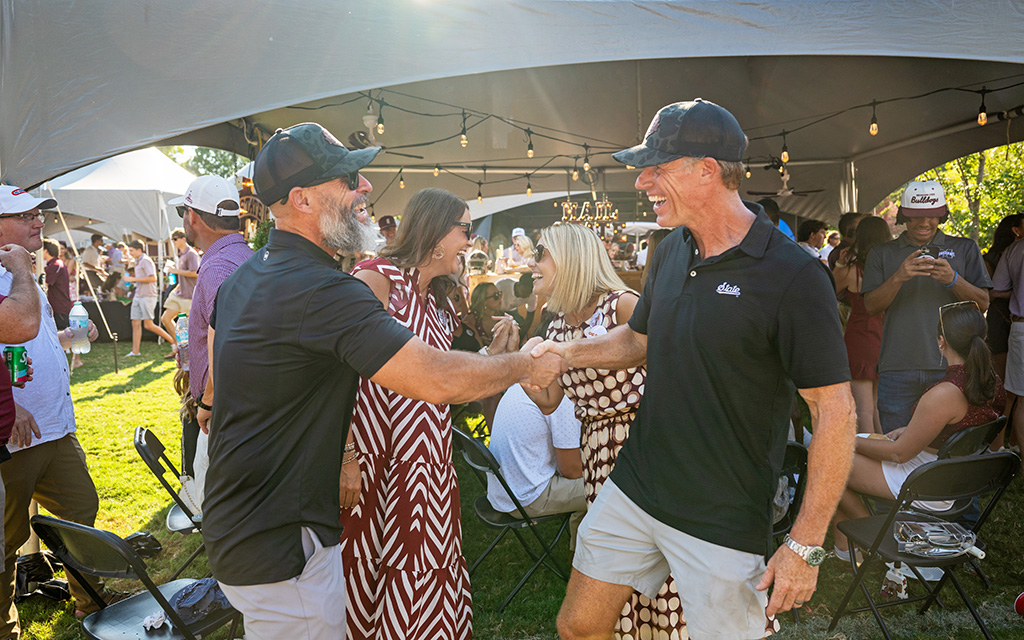
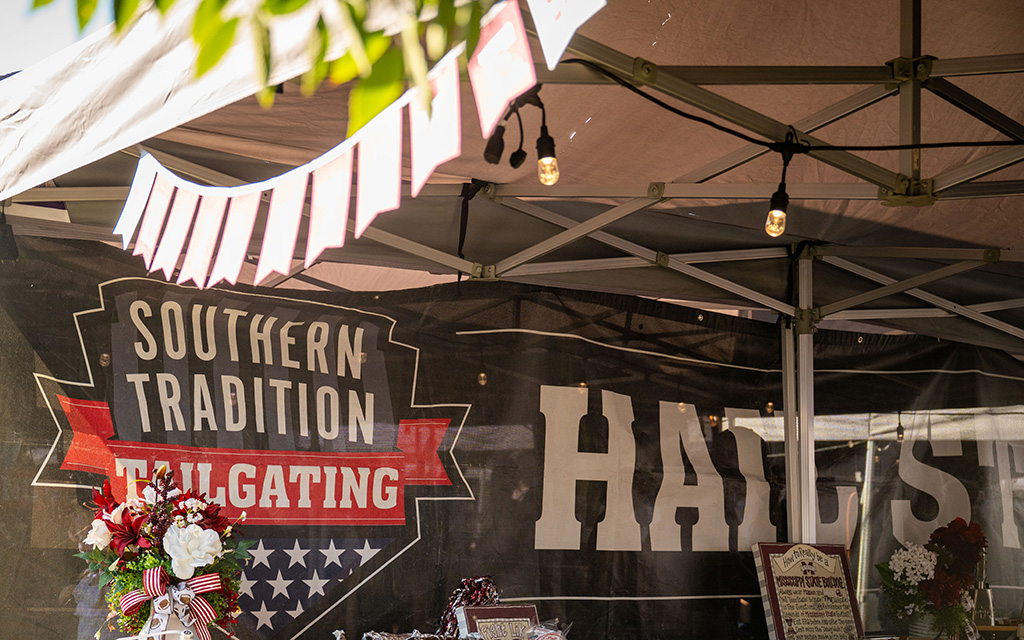
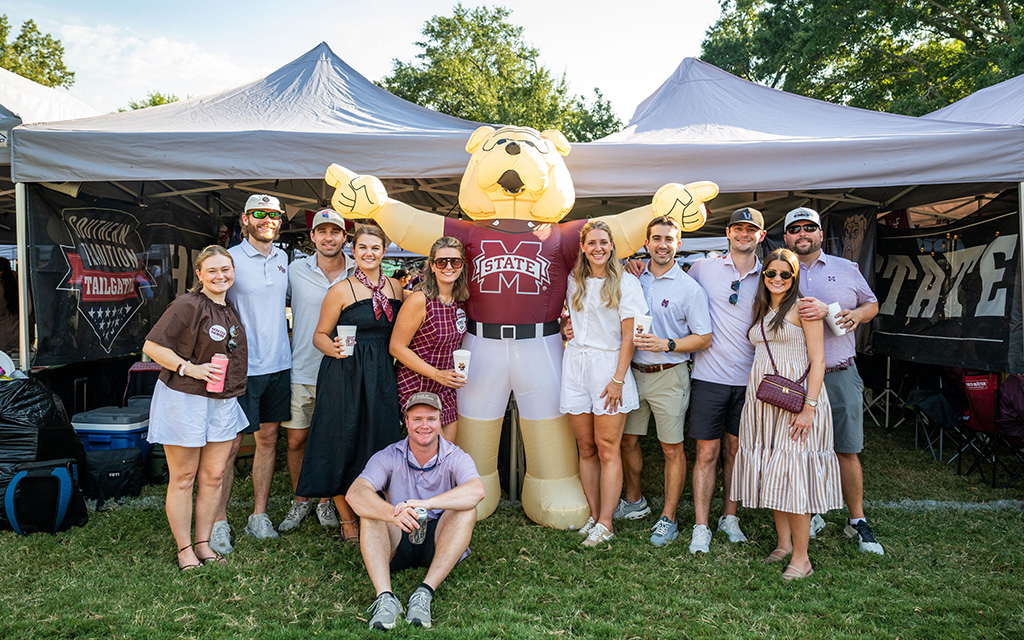
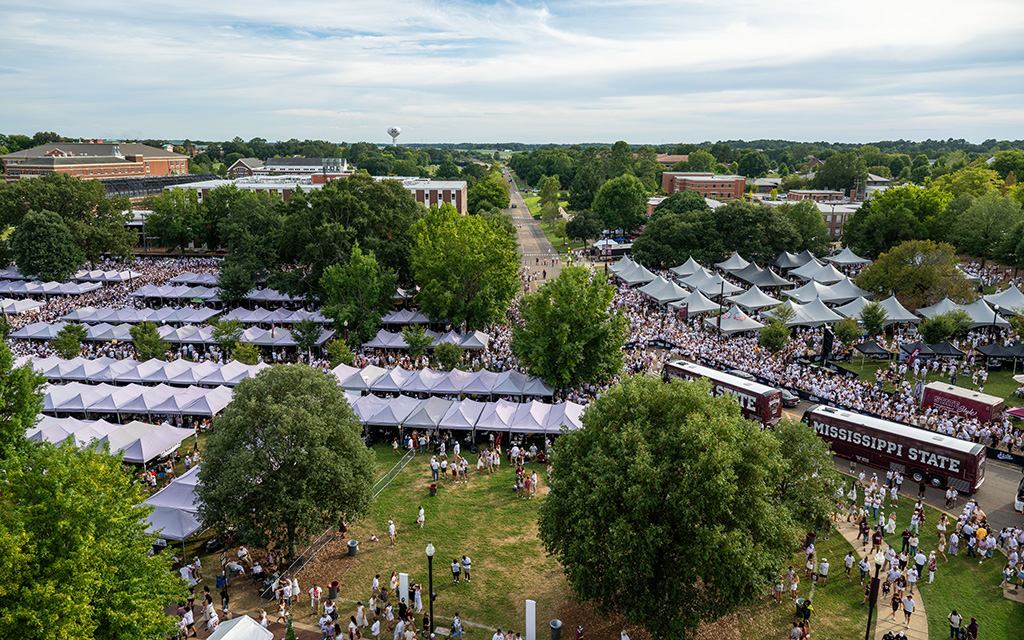
Vickers’ company, which became MSU’s exclusive tailgate vendor in 2016, now manages almost 200 setups—about 300 tents—during any given home game. The work begins on Wednesdays when more than 50 employees start hauling tents and other equipment to campus in preparation for assembly. For his customers, the experience is almost turnkey: STT sets up tables and chairs, connects electronics and lights to generators and ensures the infrastructure is ready to go. Tailgaters simply show up with their food, drinks and game-day spirit.
Once game day arrives and customers kick off the party, Vickers and his crew shift into troubleshooting and problem-solving any issues that might spoil the fun.
“You never know what can happen. It’s definitely organized chaos,” Vickers said. “We use the U.S. Marine Corps’ mantra of ‘improvise, adapt and overcome’ a lot. Things likely will never go according to plan, but you keep moving forward and figure it out.”
Vickers’ ability to overcome was put to the test early. During the second home game of STT’s inaugural 2009 season, a thunderstorm rolled through campus. The storm gusts wreaked havoc, almost taking the wind out of the sails of what has become a thriving business serving other universities’ game days, including Ole Miss and the University of California, Berkeley.
“TVs, tents—everything was blown over,” Vickers said. “It was only our second day in action, so you can imagine our customers thinking, ‘What have we gotten ourselves into?’ Even I was thinking that when I saw what happened. For a moment, I thought it was all over before it really began, but you push through.”
A second thunderstorm wiped out STT setups five years later.
“We only had a few setups at the first one, so it wasn’t as bad. At this point, however, we had more than 150 tents, so you can imagine the carnage,” he said. “We had to get heavy equipment in there just to scoop everything up—that’s how bad it was.
“Everything we do is built on a system of trial and error we’ve learned from over the last 16 years,” Vickers continued. “The learning process is simple: We’re always trying to tweak things, so the fans have a better experience. Once we figure out what works, we keep that in our bag of tricks.”
Throughout his life, Vickers has shown flexibility in the world of sports—whether in the game, the Junction or the classroom. The former Delta State University Athletics Hall of Fame swimmer started a K-12 teaching and coaching career with stints in Cleveland and Tupelo before earning a doctorate in education with a coaching development concentration from the University of Georgia.
Since joining MSU in 2007, Vickers has taught a variety of classes, including Secondary Methods in Physical Education, Coaching Expertise Development and Sports Psychology—topics that could prepare others to follow in his footsteps as leaders on and off the field.
“I want my students to be the best they can be so their students and athletes can be the best they can be, too,” he said.
“It seems like yesterday I started teaching at MSU,” Vickers continued. “There’s a saying that if you love what you do, you’ll never work a day in your life, but if you don’t, you’ll work every day until you die. I’m fortunate because I have two things—teaching and tailgating—that I get to do, not two things I have to do. With both, I feel like I’m getting to hang out with my people.”
By Carl Smith, Photos by Emily Grace McCall

Southern Traditions
After almost two decades of bringing the party to Bulldog football fans, Brad Vickers knows what a good tailgate needs.
As the owner of Southern Tradition Tailgating, he said the most important tailgate essential for any true Bulldog is a cowbell but offers the following as gameday-saving tools to make for a smoother pregame party.
“Many of these tools are obvious,” Vickers said, “but some are things you don’t think about until you realize you need them.”
Extra bottle openers, corkscrews: These have a way of disappearing when you need them most. Have a few backups scattered around the tailgate.
Heavy-duty multiport extension cords: Vickers says you can never have too many or too long extension cords. Between TVs, speakers, fans, phone chargers and lights, these are the best way to get power where it’s needed.
A good cooler: A quality cooler is the workhorse of any tailgate. It keeps drinks cold, protects the food and can even double as an extra seat.
Wagon: Moving everything from a vehicle to the tailgate is a lot easier with a wagon. Chairs, coolers, supplies, food—a wagon can haul it.
Zip ties and duct tape: While not glamorous, zip ties and duct tape can fix, secure or organize just about anything. Vickers says when something starts flapping in the wind, breaking loose or falling apart, these are among the first things his crew reaches for.
Portable phone charger: Between taking pictures, checking scores, coordinating with friends and navigating a crowded campus, phone batteries can disappear fast. A portable charger keeps the communication going when you are on the go.
Trash bags: It’s easy to focus on the food, drinks and setup and forget the cleanup. Keeping a roll of heavy-duty trash bags handy makes cleanup much easier and leaves your tailgate area looking as good as you found it. It’s a must to keep the Junction beautiful after the game is over.
Weather-ready gear: Rain, wind, heat or an unexpected cold front can change a tailgate in a hurry. Jackets, towels, ponchos, fans and a few extra blankets can turn a potential weather disaster into just another game-day story.
Sharpie: It’s one of those little things no one thinks about until it’s needed.