

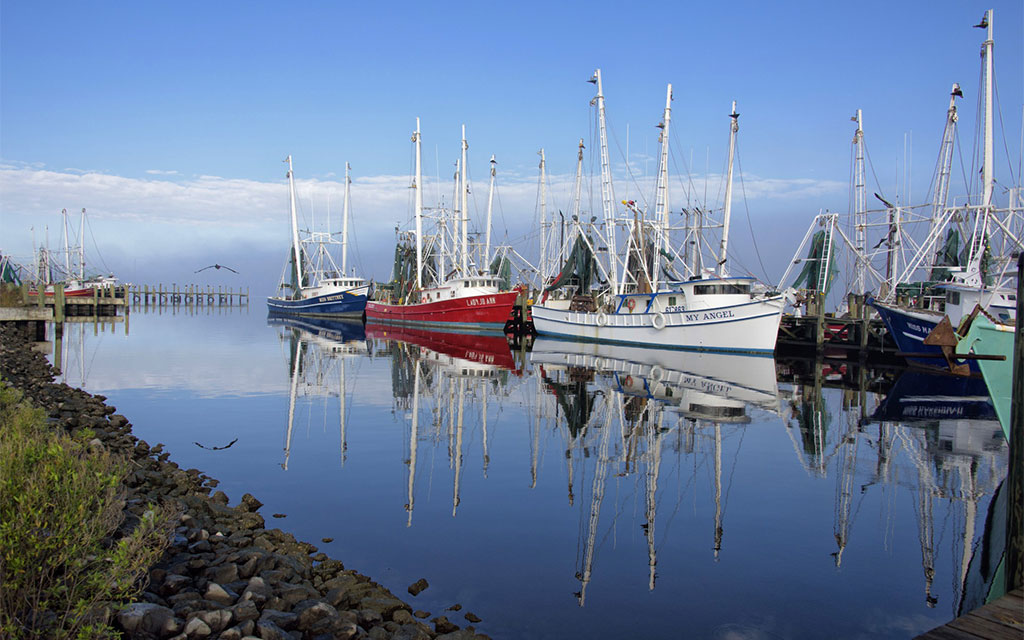
Coastal Extension finds solutions to empower coastal partners
For MSU’s Coastal Extension program in Biloxi, success means its associates have worked themselves out of a job.
One such job came up when commercial shrimpers on the Mississippi Gulf Coast got tired of losing time and money to ghost pots, or abandoned crab traps.
“When they were pulling their nets, they would scoop up derelict crab traps,” explained Eric Sparks, director of Mississippi State’s Coastal and Marine Extension Program. “This debris damages nets and takes a lot of time to untangle. The shrimpers would lose most of the catch on that side of the net.”
Sparks said it was common practice for fishermen to gather the derelict crab traps and dump them overboard in an out-of-the-way location. But storms and currents would redistribute this marine debris, making the problem never-ending.
Then MSU’s Extension Service got involved.
Coastal Extension personnel worked with shrimpers to collect data on marine debris hot spots. Then they secured funding in partnership with Mississippi Commercial Fisheries United to incentivize shrimpers to turn in those traps at locations near where they docked.
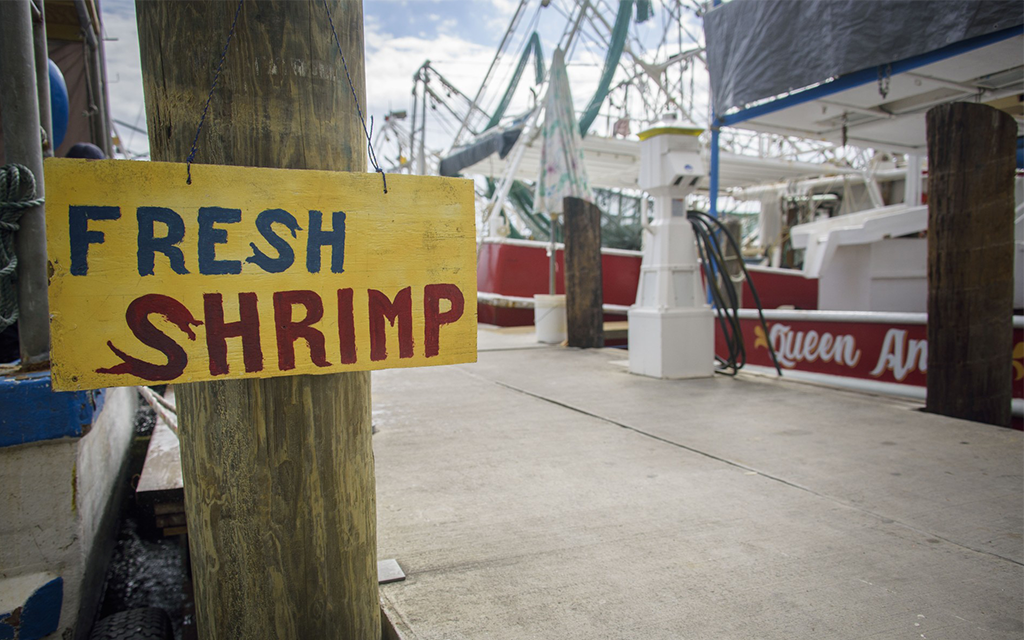
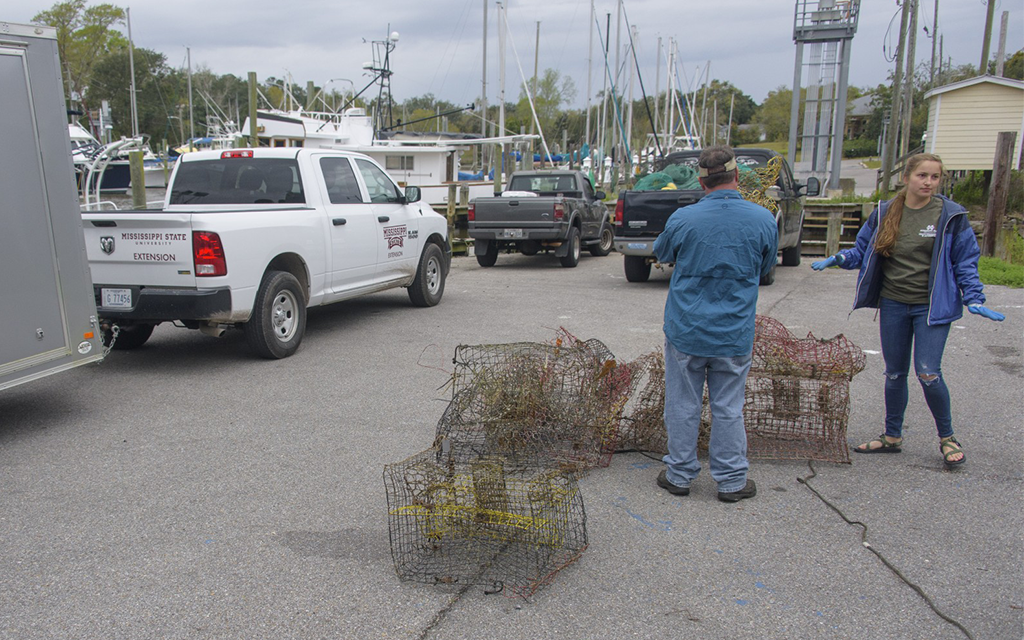
When abandoned crab traps became a costly nuisance to Gulf shrimpers, MSU Coastal Extension developed a program that encourages the removal and recycling of ghost pots to both improve shrimping conditions and reduce marine debris.
Fishermen got on board quickly and began collecting the $5 reward offered for each derelict trap tossed into the collection kennels. The program began running smoothly, permanently removing debris from the trawling grounds where nets are dragged for shrimp.
“We found over time that once the shrimpers started depositing traps at the collection points for us to recycle, a lot of them did not even turn in the paperwork to get reimbursed,” Sparks said.
With proof that shrimpers were adopting the practice of recycling the ghost pots, Coastal Extension was no longer needed. Mississippi Commercial Fisheries United now manages this successful program.
This, Sparks said, is the ultimate goal of the unit.
The MSU Extension Service as a whole focuses on putting science into practice. On the Mississippi Gulf Coast, this happens through a variety of research and outreach efforts and partnerships with dozens of agencies and organizations.
“We figure out what the needs are and adjust and adapt our program to meet those needs,” Sparks said. “We identify what is significant to fisheries managers, environmental managers or some other group, then we find a way to address those needs. Once a program is set up and running, we work out the kinks so we’re not needed anymore.
“Then we pass it along and move on to another need,” he said.
Coastal Extension has 55 employees and is based at the Coastal Research and Extension Center in Biloxi. It is closely aligned with the Mississippi-Alabama Sea Grant Consortium.
The majority of its work happens through partnerships. Since 2015, the MSU Coastal and Marine Extension Program has received more than $90 million in grant funding.
There are five main Coastal Extension groups that oversee a variety of other programs. These are Marine Fisheries Ecology, headed by Marcus Drymon; Program for Local Adaptation to Changing Environments, headed by Ali Rellinger; Coastal Upland Restoration and Ecology, headed by Jonathan Pitchford; Mississippi Sound Estuary Program, headed by Sparks; and Coastal Conservation and Restoration, also headed by Sparks.
“Under each of these main program areas are subprograms like Mississippi Master Naturalists, Mississippi Coastal Cleanup, Native Plant Producers and the shoreline program,” Sparks said. “We have significant stakeholder engagement within these.”
James Henderson, head of MSU’s Coastal Research and Extension Center, said work by MSU Coastal and Marine Extension personnel ranges from sharks to coastlines.
“Our programs affect the lives and livelihoods of a large percentage of the people on the Gulf Coast,” Henderson said. “We are proud of the fact that there is widespread knowledge among the people of the Coast as to what Extension is doing here.”
By Bonnie Coblentz, Photos by Kevin Hudson
Extension’s Coastal Reach
Coastal communities have a variety of unique needs. MSU Extension Service’s Coastal and Marine branch offers a variety of programs to fill each one.
Through these programs, Extension agents assist coastal residents and industries in finding solutions to the issues they face, as well as ways to better their environment, work more efficiently and improve coastal resiliency overall.
In addition to traditional Extension programs like Master Naturalists and 4-H and providing resources to local communities, the MSU Coastal and Marine Extension also supports coast-specific programs.
Mississippi Sound Estuary Program is a collaboration meant to increase awareness of and participation in conservation and restoration of the Mississippi Sound and its contributing watershed.
Coastal Conservation and Restoration puts science into practice by sharing the knowledge needed to make sound environmental, economic and resilient decisions.
Program for Local Adaptation to Changing Environments, or PLACE, is a network working to improve coastal response to rising sea levels and climate change.
Marine Fisheries Ecology provides science-based solutions to common issues affecting commercial and recreational fishing in the northern Gulf.
Coastal Upland Restoration and Ecology, or CURE, focuses on conserving and managing imperiled coastal grassland habitats.
For more information about MSU’s Coastal and Marine Extension, visit msucoastal.com. More information about the MSU Extension Service, including a directory of county offices and agents, can be found at extension.msstate.edu.